Home › Guides › Military modular buildings in Texas
Military & government buildings guide
Military modular buildings in Texas: a 2026 guide for bases, Guard units and government buyers
How Texas installations, National Guard and Reserve units, defense contractors and public agencies plan modular and relocatable buildings: building types, temporary vs. permanent, antiterrorism criteria, approvals, procurement, cost factors and a realistic timeline, with a North Texas focus.
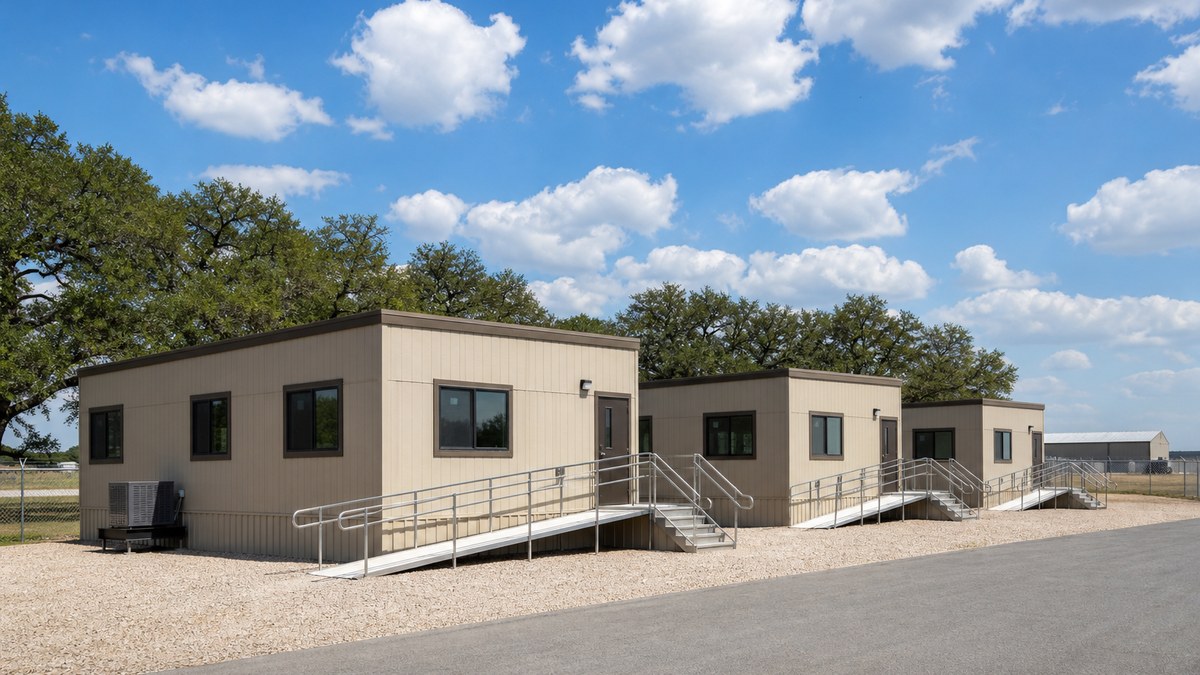
Military modular buildings are factory-built offices, training rooms, barracks-style housing, operations centers, storage and support buildings that are trucked to a base or government site, set on blocking or a foundation and connected to utilities. In Texas they serve active-duty installations, National Guard and Reserve units, defense contractors and public agencies that need space faster, or for a shorter period, than a conventional military construction project allows. Through our network of manufacturers, dealers and installers, we help buyers in Dallas-Fort Worth and across Texas compare options for purchase, lease and relocation.
Quick answer: For short-term needs on a Texas installation (swing space, surge staffing, training, deployment support), relocatable modular buildings leased or bought outright are usually the fastest path. For space a unit will use long-term, permanent modular construction delivers a conventional-looking building with a factory-built schedule advantage. On Department of Defense property, plan around the installation's engineering office and the DoD's Unified Facilities Criteria (UFC), including antiterrorism standards. Cost depends on size, the building's use, security and finish requirements, site work, foundation and whether you buy or lease. Start with how long you need the space; it drives almost every other decision.
This guide is for installation planners and public works staff, unit facility managers, contracting officers, prime contractors and subcontractors, defense manufacturers and state and local agencies across North Texas and the rest of the state. If you already know what you need, request a free quote or see our modular government buildings page.
Why Texas is a major market for military modular buildings
Texas hosts some of the largest military installations in the country. According to an economic impact analysis by the Texas Comptroller of Public Accounts, prepared for the Texas Military Preparedness Commission and announced by the Governor's office in June 2024, the state's major military installations supported an estimated $151.2 billion in economic output and about 677,000 direct and indirect jobs in 2023. Installations range from Fort Hood near Killeen and Fort Bliss in El Paso to Joint Base San Antonio in San Antonio, Dyess Air Force Base in Abilene and naval and Army aviation activity around Corpus Christi.
North Texas has its own concentration. Naval Air Station Joint Reserve Base Fort Worth sits a few miles west of downtown Fort Worth and hosts Navy, Marine Corps, Air Force Reserve, Army Reserve and Texas Air National Guard units, including the 136th Airlift Wing. The same Comptroller analysis credited NAS JRB Fort Worth with about 22,500 jobs and roughly $4.9 billion in economic impact. Next door, Lockheed Martin's Fort Worth plant builds the F-35, and the wider Metroplex is home to defense and aerospace suppliers in Grand Prairie, Arlington, Dallas and beyond.
All of that activity creates steady demand for space that is needed quickly, needed for a set period, or needed while a permanent facility is planned and funded. That is exactly where modular and relocatable buildings fit.
Common types of military and government modular buildings
"Military modular building" covers many building types. The table below shows the most common requests and what each one usually involves.
| Building type | Typical use | Key planning items |
|---|---|---|
| Administrative offices | Unit headquarters, staff sections, contracting and program offices | Open and private offices, conference rooms, data and secure IT rooms, restrooms |
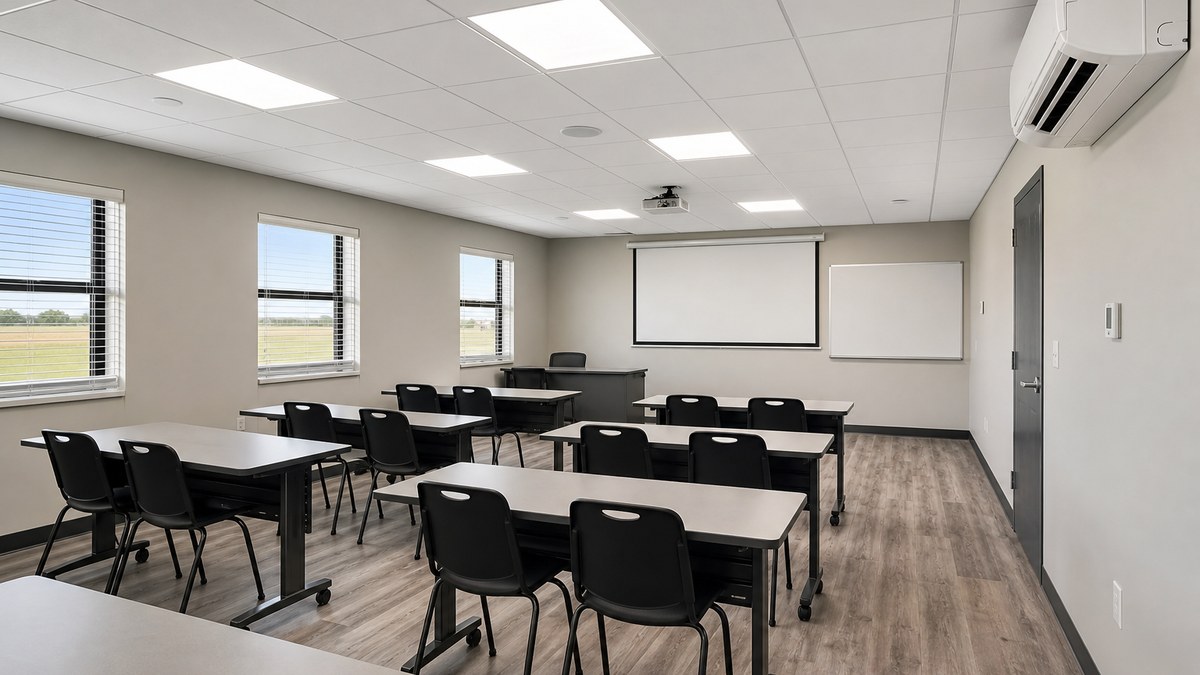
| Training and classroom buildings | Classrooms, simulator rooms, briefing rooms, schoolhouse overflow | Seating capacity, AV, acoustics, egress, accessibility |
| Operations and command space | Operations centers, dispatch, flight line support, range control | Backup power, redundant HVAC, access control, communications pathways |
| Barracks-style and workforce housing | Temporary lodging for surge, training rotations or contractors | Sleeping rooms, bathrooms, laundry, fire protection, life safety |
| Dining and kitchen buildings | Temporary dining facilities during renovations or exercises | Commercial kitchen equipment, grease management, health review |
| Medical and dental support | Clinic swing space, screening and processing | Exam rooms, hand sinks, infection control, patient flow |
| Guard houses and gate buildings | Entry control points, visitor centers, inspection booths | Visibility, security glazing where specified, HVAC for 24/7 staffing |
| Storage and equipment buildings | Supply, tool, records and equipment storage | Climate control, security, shelving or racking, loading access |
| Restroom and shower buildings | Ranges, training areas, flight lines, job sites | Water and sewer or holding tanks, ADA units, durability |
Many of these can be combined into a larger modular complex with interior corridors and shared systems. Specialized programs, such as secure rooms or equipment shelters, are handled as custom modular buildings. See also our pages for modular workforce housing, modular kitchens and modular restroom buildings.
Temporary, semi-permanent or permanent?
Several of the searches that lead government buyers to our site ask about semi-permanent structures for government and relocatable government buildings. The terms matter, because the expected service life changes the standards, the funding path and the foundation.
| Relocatable / temporary | Permanent modular | |
|---|---|---|
| Best for | Swing space, surge, training rotations, interim facilities while a permanent building is funded | Long-term offices, training, operations or support buildings |
| Foundation | Blocking, piers and tie-downs designed for removal | Permanent foundation designed for the site |
| Look | Clean commercial finishes; skirting, decks and canopies available | Can match installation architectural standards: brick, stone, metal panel, pitched roofs |
| Budget | Lease from operating funds, or purchase of new or used units | Capital purchase; may follow military construction or other capital funding rules |
| End of need | Removed, relocated to another site or resold | Stays as real property |
On DoD installations, the duration a building will stay in place is not just a budget question. The DoD's antiterrorism criteria in UFC 4-010-01 treat transitional, temporary and relocatable structures intended for limited use of no more than seven years differently from permanent facilities: they must meet a smaller set of the standards, while buildings planned for longer use must meet all provisions. If a temporary building is later converted to real property, the UFC requires it to be upgraded to the standards for existing buildings. Decide the realistic service life with your installation's engineers early, so the building you buy fits the rules that will apply to it.
Tip: Compare a lease and a purchase on the same scope and the real timeline. Delivery, setup, relocation and removal can make a lease look very different from a purchase once a project stretches past its original end date.
Standards and approvals on military and government sites
Requirements vary by agency, installation and project. Always confirm the path with the contracting officer, the installation's engineering or public works office and your designer. Here is how the main pieces usually fit together.
Department of Defense installations
Federal installations follow DoD criteria and the installation's own processes. The Unified Facilities Criteria (UFC), published on the Whole Building Design Guide, set design standards for DoD facilities, and the installation's public works or civil engineering office typically reviews siting, utilities, fire protection and security. Expect questions about:
- Antiterrorism standards. UFC 4-010-01 sets minimum standards that apply regardless of the procurement or funding source, with requirements that depend on whether the building is inhabited and how long it will remain.
- Siting and standoff. The UFC sets minimum distances from the installation perimeter for new buildings, so the building location on a base is not just a matter of where utilities are convenient.
- Fire protection and life safety. Fire alarm, sprinklers and egress are reviewed against the criteria the installation applies.
- IT, communications and security. Data pathways, access control and any secure rooms are coordinated with the unit's communications and security staff.
- Installation architectural standards. Many bases have design guides for color, materials and roof style, especially for permanent buildings.
State and local government sites
Texas regulates commercial modular buildings through the Texas Department of Licensing and Regulation's (TDLR) Industrialized Housing and Buildings program. Buildings are designed to the applicable codes, plan-reviewed and inspected during manufacture by approved third parties, and carry state documentation. TDLR's guidance notes that local jurisdictions may not require amendments to the mandatory codes for these buildings, but cities and counties still enforce zoning, setbacks and site permits, and foundations are designed by a Texas-licensed engineer or architect. This is the usual path for state agencies, the Texas Military Department's state-owned facilities, counties, cities and school districts. Whether state documentation is also required for a building on federal property depends on the contract, so confirm it with the contracting officer.
Accessibility
Accessibility requirements depend on who owns and uses the building. On state and local sites in Texas, the ADA and the Texas Accessibility Standards (TAS), administered by TDLR, apply, and many projects are registered with TDLR and reviewed by a Registered Accessibility Specialist. Federal facilities follow federal accessibility standards. Plan ramps, restrooms and the route from parking as part of the design.
Labor and contract clauses
Federal construction contracts carry specific clauses. For example, the U.S. Department of Labor states that the Davis-Bacon Act applies to federal construction contracts in excess of $2,000, which affects the wages paid for on-site installation work. Domestic sourcing and other clauses can also apply. Your contracting officer and the solicitation are the authority on what applies to your project.
Tip: Ask for the modular building's drawings, engineering and any state documentation at the quote stage. Installation engineers, fire officials and contracting staff all review them, and having them early keeps approvals moving.
How government and military buyers procure modular buildings
Procurement is often the longest step in a government modular project, so plan it as carefully as the building. Common paths include:
- Federal solicitations. Many federal requirements are posted publicly on SAM.gov. Vendors who want to bid directly must be registered there.
- Existing contract vehicles. Agencies can use established federal contract vehicles, such as GSA schedules or an installation's existing construction contracts, where modular buildings are within scope.
- Prime contractor subcontracts. On larger projects, a general contractor holds the government contract and buys the modular building as part of the work.
- State and local purchasing. Texas agencies, counties, cities and school districts typically buy through competitive bids or cooperative purchasing programs, subject to their own procurement rules.
- Defense contractors. Prime and sub-tier defense suppliers buying for their own sites follow normal commercial purchasing, though their customers' security requirements may still shape the building.
Whatever the path, the most useful thing you can bring to a quote is a clear statement of the space you need, the site and the dates. Through our network of manufacturers, dealers and installers, we can return options that fit your procurement method. See our sales, lease and rental services and our government and public sector page.
Built for Texas weather, soil and long duty days
Military buildings are often occupied around the clock, and Texas conditions are hard on any structure:
- Heat. HVAC sized for full occupancy on 100°F afternoons, good insulation, reflective roofing and shaded entries matter for operations centers and training rooms that are full all day. Consider redundant units where downtime is not acceptable.
- Wind, storms and hail. Buildings must be anchored for the local design wind speed. Impact-resistant roofing and siding reduce hail damage and downtime in North and Central Texas.
- Expansive clay soils. Much of North and Central Texas sits on clay that swells when wet and shrinks during drought. Engineered blocking, piers or foundations, plus good drainage, keep floors level and doors closing.
- Freezes. Protect plumbing and plan backup power for winter storms, especially for buildings that support continuous operations.
- Dust and coastal air. West Texas dust and Gulf Coast humidity and salt air affect HVAC filtration and exterior materials.
What drives the cost of a military modular building
We don't publish price lists, because two buildings with the same footprint can price very differently once the use, security requirements and site are known. These are the factors that move the number:
- Use and occupancy. Storage and offices are simpler than training rooms, housing, dining or operations space with backup power and redundant systems.
- Size and number of modules. More floor area costs more, but repeated room types lower the cost per room.
- Service life. Temporary buildings on blocking cost less to set than permanent buildings on engineered foundations with installation-standard finishes.
- Antiterrorism and security features. Requirements depend on occupancy, duration and the installation, and can affect glazing, construction and siting.
- New vs. used. Used or fleet units can lower cost and shorten lead times for temporary needs when the layout fits.
- Fire protection. Fire alarm, sprinklers and fire-rated separations as required.
- Site work. Grading, drainage, utility extensions, paving, ramps and decks are often the largest variable.
- Delivery distance and access. Distance from the factory or fleet yard, wide-load route permits, base access procedures and crane access.
- Contract requirements. Wage rules, bonding, reporting and documentation required by the contract.
- Lease term (if leasing). Longer terms usually lower the monthly cost; relocation and removal are priced separately.
The fastest way to a reliable number is a quote based on your site, your space needs and your timeline. Send us those three things and we'll return options to compare.
A realistic project timeline
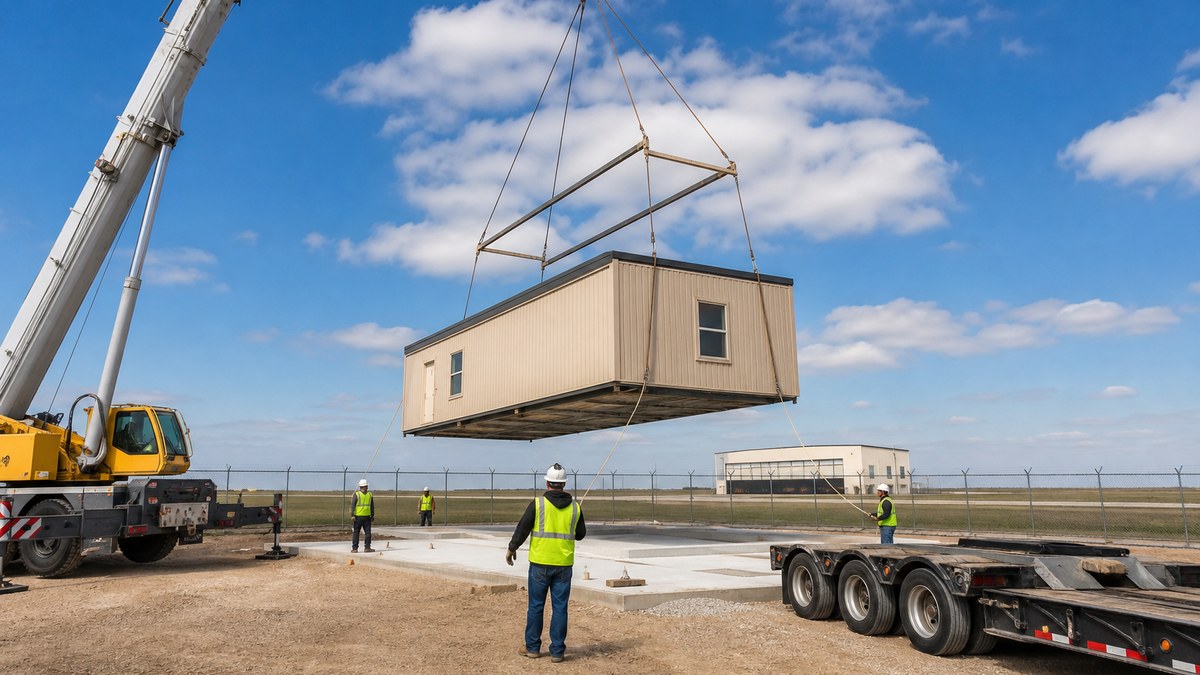
Every project has its own schedule, and your quote should include one. This is the typical sequence. Factory production and site work overlap, which is where modular construction saves time; McKinsey & Company's 2019 analysis found that modular construction can accelerate project schedules by 20 to 50 percent. Government projects add approval and procurement steps, so treat that range as an industry benchmark, not a promise.
| Phase | What happens |
|---|---|
| 1. Requirement | Define the use, headcount, service life and site; buy vs. lease; identify the procurement path and funding. |
| 2. Siting and design | Site selected with the installation or agency; layout and engineering; antiterrorism, fire and IT coordination. |
| 3. Procurement | Solicitation, quotes or contract modification; award. |
| 4. Approvals | Installation or agency review of drawings; state documentation and local permits where they apply. |
| 5. Production and site work | Modules built and inspected in the factory while utilities, pads and foundations are prepared. |
| 6. Delivery, set and finish | Base access coordinated, modules delivered and set, joined, connected, inspected and accepted. |
Used or fleet units can shorten the design and production phases for temporary needs, but they still need siting, approvals and site work.
Four common Texas scenarios
1. Swing space during a renovation at a North Texas installation
A unit at NAS JRB Fort Worth needs office and briefing space while its building is renovated. Leased relocatable offices on blocking, sited with the installation's engineers and meeting the antiterrorism standards for temporary buildings, keep the unit working on base and leave when the renovation ends.
2. Training rotation housing and classrooms in Central Texas
Training activity near Killeen and Temple brings rotations of soldiers, instructors or contractor staff. A modular complex with classrooms, restrooms and barracks-style rooms provides the space for the duration of the program and can be relocated afterward.
3. Defense contractor program office in DFW
A defense supplier in Grand Prairie or Irving wins a new program and needs engineering and program office space next to its plant before a permanent expansion is designed. A double-wide or multi-module office complex adds space quickly, and an industrial and in-plant layout can be built inside the existing facility. Our mobile offices page covers smaller footprints.
4. State and county emergency response
After a hail storm, tornado or flood, a Texas county or state agency needs temporary offices, storage and restrooms for responders. Relocatable buildings, storage and office containers and restroom units restore working space while damaged buildings are repaired. Agencies in Denton, McKinney, Waxahachie and across our Texas service area use the same approach.
Checklist before you request quotes
- Building use, headcount and hours of operation (including 24/7 operations).
- Expected service life, start date and, if leasing, end date.
- Site location: on an installation, state or county property, or private land.
- Installation or agency requirements you already know: antiterrorism, siting, architectural standards, IT and access control.
- Room list: offices, classrooms, sleeping rooms, restrooms, storage, secure rooms.
- Backup power, redundant HVAC and fire protection requirements.
- Utilities available at the site: power, water, sewer and data.
- Access for trucks and cranes, and base access procedures for delivery crews.
- Procurement path: direct purchase, solicitation, existing contract vehicle or prime contractor.
- Contract clauses that affect installation work, such as wage and reporting requirements.
Frequently asked questions
What are military modular buildings?
They are factory-built offices, classrooms, housing, operations, storage and support buildings that are trucked to a military or government site, set on blocking or a foundation and connected to utilities. They can be temporary and relocatable or permanent.
Do military modular buildings have to meet antiterrorism standards?
On Department of Defense property, generally yes. UFC 4-010-01 sets minimum antiterrorism standards that apply regardless of procurement or funding source. Temporary and relocatable buildings intended for no more than seven years must meet a smaller set of the standards than permanent buildings. The installation decides how the criteria apply to a specific project.
What is a semi-permanent government building?
The term usually describes a building that stays in place for years but is not built as a conventional permanent facility, such as a relocatable modular office on engineered blocking. The exact definition depends on the agency, so confirm how your agency classifies the building, because it affects standards and funding.
Can we lease modular buildings for a military installation?
Yes. Leasing is common for swing space, surge staffing, training rotations and interim facilities. Purchase usually makes more sense for buildings that will stay in place long-term.
How much does a military modular building cost?
It depends on the use, size, service life, security and fire protection requirements, site work, delivery and base access, contract requirements and whether you buy or lease. The most accurate answer is a quote based on your site, space needs and timeline.
Do TDLR rules apply to modular buildings on a military base?
TDLR's Industrialized Housing and Buildings program covers commercial modular buildings in Texas and is the usual path for state and local government projects. Requirements on federal property are set by the federal agency and the contract, so confirm with the contracting officer whether state documentation is also required.
Do you hold government contracts or sell directly to the military?
We connect buyers with modular building options through our network of manufacturers, dealers and installers. Tell us your procurement path, and we will match you with suppliers who can work within it.
Can modular buildings be used for barracks or temporary lodging?
Yes. Modular buildings can include sleeping rooms, bathrooms, laundry and common areas, subject to life safety and fire protection requirements for residential occupancy. Our workforce housing page covers similar projects.
How do Texas clay soils affect modular buildings on a base?
Expansive clay in North and Central Texas swells and shrinks with moisture, which can move a building. Engineered blocking, piers or foundations, plus good drainage, keep floors level and connections tight.
Which Texas locations do you serve?
We serve Dallas-Fort Worth and all of Texas, including Fort Worth, Killeen, Temple, San Antonio, El Paso, Abilene, Corpus Christi and Houston.
Related
Also see our modular buildings overview, commercial modular buildings, construction site buildings, our portable classrooms guide for training space ideas, and local pages for Houston and Plano.
Sources
- Office of the Texas Governor, Governor Abbott announces $151.2 billion economic impact of military installations in Texas (June 2024; analysis by the Texas Comptroller of Public Accounts for the Texas Military Preparedness Commission).
- U.S. Department of Defense, UFC 4-010-01, DoD Minimum Antiterrorism Standards for Buildings (Whole Building Design Guide).
- U.S. Department of Labor, Fact Sheet #66: The Davis-Bacon and Related Acts.
- Texas Department of Licensing and Regulation, Industrialized Housing and Buildings program.
- Texas Department of Licensing and Regulation, Architectural Barriers / Texas Accessibility Standards.
- KBTX, Fort Cavazos officially redesignated Fort Hood (June 2025).
- McKinsey & Company, Modular construction: From projects to products (2019).
- Modular Building Institute, industry resources.
This guide is general information, not legal, contracting, security or code advice. Requirements vary by agency, installation, contract and project; confirm with your contracting officer, installation engineers, building official and fire marshal. Dallas Modular Structures is not affiliated with or endorsed by the Department of Defense or any military branch.