Home › Guides › Swing space for school bond projects
School facilities guide
Modular swing space for DFW school bond projects: keeping classes running while campuses are rebuilt
North Texas voters approved billions in school bonds in 2026, and much of that money replaces or renovates occupied campuses. This guide explains how Dallas-Fort Worth districts use portable classrooms and modular buildings as swing space, which Texas rules apply, how to plan the site, and how to get comparable quotes.
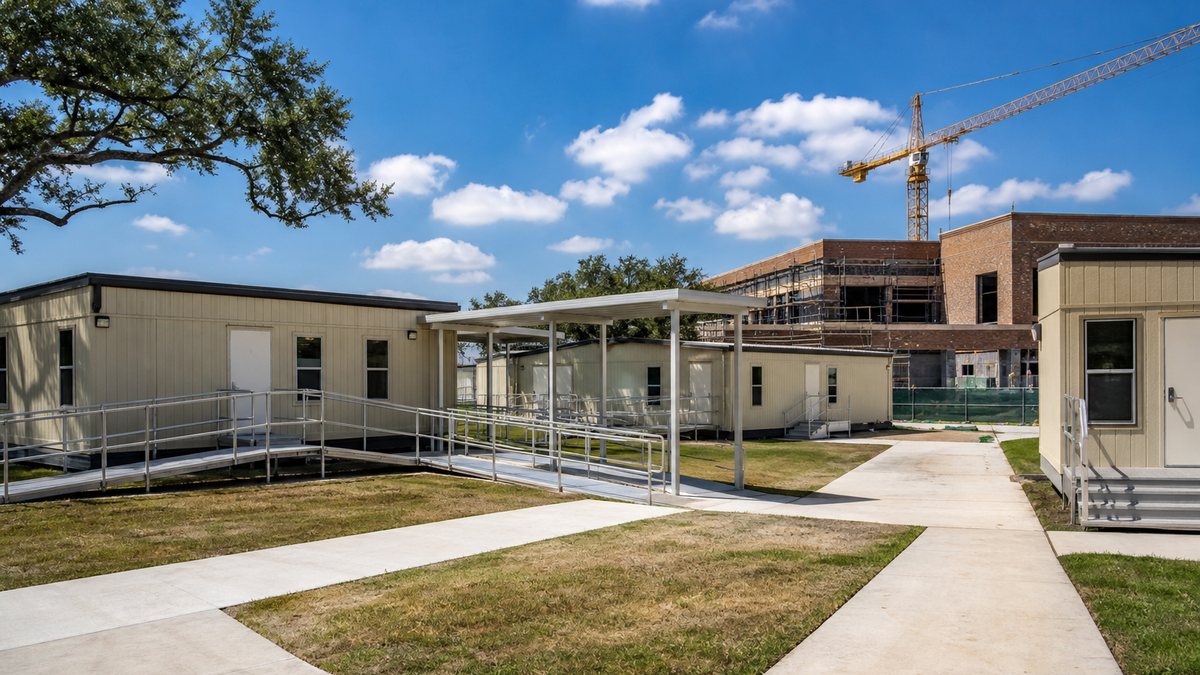
Modular swing space for school bond projects is temporary classroom and support space, usually portable classrooms, classroom complexes, modular restrooms and offices, that a district rents, leases or buys so students can keep learning while their campus is demolished, rebuilt or renovated. In Dallas-Fort Worth, swing space is set up either on the same campus (a "classroom village" on a play field or parking lot) or at a separate site such as a vacant campus. The short version: decide the swing-space strategy early in bond planning, size the buildings to the enrollment that will move, treat the installation as a real school facility under Texas rules, and get quotes that include site work, ramps, walkways, utilities, security hardware and removal. Through our network of manufacturers, dealers and installers, we help DFW districts, charter schools and private schools compare full-scope swing-space options.
Quick answer: Districts in DFW usually choose one of four swing-space models: (1) an on-campus modular village while the new school is built on another part of the same site, (2) moving the whole school into a vacant or under-used campus, (3) a temporary modular campus on separate land, or (4) phasing, where one wing at a time moves into portables during a renovation. Texas treats a modular or portable building used as a school facility as a school facility: TEA's facility and school-safety rules, the Texas Industrialized Housing and Buildings program, the Texas Accessibility Standards and your city's site permits all apply. Plan the swing space with the architect before the construction schedule is fixed.
This guide is general information, not legal, engineering or procurement advice. Confirm requirements with TEA, TDLR, your city, your architect and your purchasing department. To price a project, request a free quote or call (702) 738-2218.
Why swing space matters for North Texas bond programs in 2026
School construction in North Texas is entering a busy stretch. On May 2, 2026, Dallas ISD voters approved a $6.2 billion bond package, reported as a state record. According to NBC 5 DFW and CBS News Texas, the program will replace 26 aging school buildings, fund upgrades across every campus, and remove the roughly 700 portable classroom buildings the district still uses. Spaces4Learning, citing CBS, reported those portables serve nearly 10,000 students, and that projects will roll out over several years based on facility conditions.
Dallas was not alone. CBS News Texas reported that in the same May 2026 election, voters in Birdville, Decatur and Lancaster ISDs approved bonds, Arlington ISD voters approved propositions for school replacements, buses and technology, and Ponder ISD voters approved new-school and device propositions. Other proposals, including Pilot Point ISD's and Sanger ISD's, failed, which often means those districts revisit their plans and keep using existing space longer.
Replacing a school is different from building a new one on open land. Students are already in the old building. Unless the new school can go up on another part of the site while the old one stays open, the district needs somewhere for those students, teachers and staff to go for one or more school years. That temporary home is the swing space, and in Texas it is very often modular.
Removing portables and using portables are not a contradiction. A district can be retiring old, permanently parked portables (the Dallas ISD plan targets those) while renting newer, properly specified modular buildings as a short-term swing campus. The difference is the plan: swing space has a defined end date, a removal plan and a building specified for the term, not a "temporary" building that stays for decades.
The four swing-space models DFW districts use
Every campus is different, but most bond projects land on one of these four approaches, or a mix of them.
| Model | How it works | Best when | Watch-outs |
|---|---|---|---|
| On-campus modular village | Classrooms, restrooms and offices set on a field or lot of the same campus while the old building is demolished or the new one is built | The site is large enough; families and bus routes stay the same | Construction traffic, noise and fencing next to students; separating the construction zone from school traffic |
| Move to a vacant campus | The whole school moves into a closed or under-used district building, sometimes with added portables | The district has a suitable building within a reasonable bus distance | Transportation changes, building condition, capacity gaps filled with portables |
| Temporary modular campus on separate land | A complete modular school (classrooms, restrooms, admin, sometimes a cafeteria) on leased or district land | No room on site and no vacant building nearby | Zoning, utilities from scratch, fire lanes, drop-off loops and full site work |
| Phased renovation | One wing or grade level at a time moves into portables during a renovation | Renovation rather than full replacement | Multiple moves, longer total use of temporary space, keeping the occupied building safe |
For the buildings themselves, see our portable classrooms, classroom complexes and education buildings pages, and the industry overviews for education and K-12 schools.
What a swing campus needs besides classrooms
The most common planning mistake is counting classrooms and forgetting everything else a school day needs. A complete swing campus usually includes:
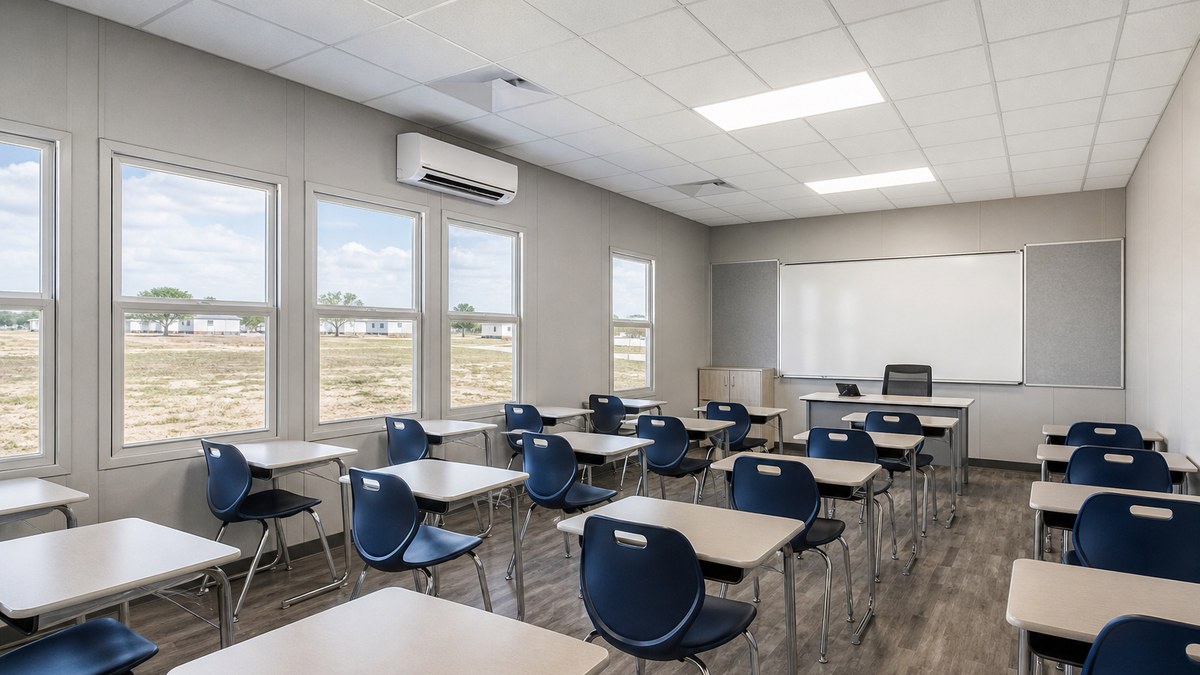
- Classrooms sized for the grades moving in, including special education, pre-K and science rooms where needed. Single classrooms, double classrooms and multi-section complexes are all available through our network.
- Restrooms for students and staff, sized for the population and placed so supervision is practical. Modular restroom buildings can connect to sewer and water; check plumbing code counts with your design professional.
- Administration and nurse space, including a controlled main entrance where visitors check in.
- Food service, if students cannot walk to an existing cafeteria. Options range from serving lines in a multipurpose building to a full modular kitchen.
- Covered walkways, ramps and decks that connect buildings and meet accessibility rules. In Texas heat and storms, shade and covered routes make a real difference.
- Storage for furniture, instructional materials and records that do not fit in the temporary rooms. Storage and office containers are a common answer.
- Contractor field offices for the general contractor and the district's project managers on the same site. See our mobile offices page and the mobile office trailer rental guide.
Texas rules that apply to modular swing space
Swing space is temporary, but Texas does not treat it as a lesser building. Four layers of rules usually apply.
1. TEA school facility standards
The Texas Education Agency's school facilities rule, 19 TAC §61.1040, defines a "modular, portable building" broadly. It includes an industrialized building under Texas Occupations Code Chapter 1202, any relocatable educational facility, and any other manufactured or site-built building that can be relocated and is used as a school facility. The same rule defines "new construction" to include the installation of a modular building. In practice, that means a district should run a swing-space installation through the same architect, engineer and compliance process it uses for other construction, and ask the design team which space, safety and certification provisions apply to the specific project and trigger date.
2. TEA school safety requirements
TEA's school safety rule, 19 TAC §61.1031, applies to all instructional facilities owned, operated or leased by a school system, regardless of the date of construction or lease, and it expressly covers modular, portable buildings. Highlights that affect modular swing space:
- Door numbering. Exterior doors of all instructional facilities, including modular, portable buildings, must carry alphanumeric characters for first responders (the rule references IFC §505 and a minimum character height of four inches).
- Exterior doors. Exterior doors must be closed, latched and locked, with limited exceptions for doors that are actively monitored or inside an exterior secured area. Doors must close and lock automatically after entry or exit and still allow emergency egress from the inside.
- Seeing who is at the door. Classrooms with exterior entry doors, which describes most portable classrooms, need a way for someone inside to see who is trying to enter.
- Glass and windows. Exterior door glass and ground-level windows must not be easily broken, and windows must lock from the inside.
- Inspections and certification. Districts must inspect exterior doors at least weekly during school hours and certify compliance annually as part of their safety and security audits.
Specify door hardware, vision panels, glazing and numbering in the rental or purchase quote, not as an afterthought. A rented portable that arrives with residential-style hardware can hold up an opening.
The rule also describes an "exterior secured area": a fenced area with a fence or wall at least six feet high with anti-climb features (or at least eight feet high), with locked gates that still allow emergency exit. On a campus with a modular village and an active construction site, a well-planned fence line does double duty: it separates students from construction and helps meet the door rules.
3. The Texas Industrialized Housing and Buildings program
Commercial modular buildings in Texas, including classrooms, are regulated by the Texas Department of Licensing and Regulation (TDLR) through the Industrialized Housing and Buildings (IHB) program. Each module is built to the state's mandatory codes and carries a Texas decal. Cities may not require amendments to those mandatory codes for decaled buildings, but they still enforce zoning, setbacks, site permits and inspections. Used buildings moved between sites can need recertification if records are missing or the building was altered; our used vs. new modular buildings guide explains the decal and recertification checks.
4. Accessibility, permits and the site
Swing campuses must be accessible. Texas applies the ADA and the Texas Accessibility Standards through TDLR, and projects with an estimated construction cost of $50,000 or more must be registered with TDLR for accessibility review. Ramps, landings, walkway slopes, restroom layouts and accessible routes between buildings all count. The city where the campus sits handles the site permit, utilities, fire lanes and final inspection; outside city limits, Texas uses third-party inspection for IHB installations. Our modular building permits guide covers the steps city by city.
Sizing swing space: how to count what you need
Start from the enrollment that will actually move, not the building's design capacity. A simple planning sequence:
- List every room type in the current school: general classrooms by grade, special education, pre-K, labs, music, library, offices, nurse, counseling, workrooms, restrooms and storage.
- Decide what can be shared or dropped for the swing period. Some districts pair a swing campus with a nearby school's gym, cafeteria or library; others need everything on site.
- Convert to buildings. Your architect applies the space standards that govern the project. Through our network, the building options are then matched: single classrooms, double classrooms, and multi-section complexes with interior corridors.
- Add the support buildings from the list above, and the contractor's field offices if they share the site.
- Add a margin for enrollment change. Bond schedules move, and an extra classroom is easier to order at the start than mid-year.
Interior-corridor complexes vs. individual portables. A multi-section complex with an interior corridor puts several classrooms behind fewer exterior doors. That can simplify supervision and the exterior-door rules, and keeps students out of the weather between classes. Individual portables are faster to rearrange. Ask for both options when you request quotes.
Site planning on a DFW campus
The site work is often the biggest variable in a swing-space quote. North Texas campuses add a few local challenges.
Expansive clay soils
Much of Dallas, Tarrant, Collin and Denton counties sits on clay that swells when wet and shrinks when dry. Blocking and piers on a field that drains poorly can shift over a school year, and doors and ramps go out of alignment. Grade the pad to drain, follow the foundation design from a Texas-licensed engineer, and plan re-leveling checks. Our guide to foundations on North Texas clay goes deeper.
Heat, hail and wind
A swing campus lives through at least one full Texas summer and one spring storm season. Specify HVAC sized for long hot spells, roof and wall systems suited to hail, and proper tie-downs and anchors. See modular buildings for Texas weather.
Utilities and fire access
Classrooms need power, data, fire alarm tie-ins and, for restroom and kitchen buildings, water and sewer. Fire lanes, hydrant distances and separation between buildings are set by the fire code and the local fire marshal. Bring the utility and fire-access plan into the first site layout, not the last.
Traffic, drop-off and the construction zone
On an on-campus village, parents, buses, staff and construction trucks share the same entrances. Separate them with fencing, scheduled deliveries and clear walking routes from the drop-off to the classrooms. Covered walkways reduce the time students spend outside in heat or rain.
Rent, lease or buy swing space?
Most swing space is rented or leased because the need has an end date. Buying can make sense when a district runs several bond phases in a row and can move the same buildings from campus to campus, or when the buildings will later become permanent space somewhere else.
| Option | Fits when | Things to confirm |
|---|---|---|
| Rent | One project with a short or uncertain term | Term extensions if construction runs long; what happens to the rate after the initial term |
| Lease | A multi-year phased program with a known sequence | Relocation between campuses, who pays for moves and re-setting, end-of-term condition |
| Buy | Several phases in a row, or later permanent reuse | Decal and records for future moves, storage between phases, resale or reuse plan |
Our rental vs. lease vs. buy guide explains the trade-offs in detail, and the services page covers sales, leasing, delivery and relocation.
Cost factors that drive a swing-space quote
We do not publish prices, because swing-space costs depend heavily on the site and the term. These are the factors that move a quote up or down:
- Number and type of buildings: single or double classrooms, complexes, restrooms, admin, food service.
- Term: months on rent, lease length, and the chance of extensions if the new school runs late.
- Site work: grading, pads, drainage, foundations or blocking on clay, and restoring the field afterward.
- Utilities: power service and distribution, fire alarm, data, water and sewer runs.
- Accessibility and circulation: ramps, decks, steps, covered walkways and accessible routes between buildings.
- Security and safety: door hardware, vision panels, glazing, fencing, cameras and door numbering to meet TEA rules.
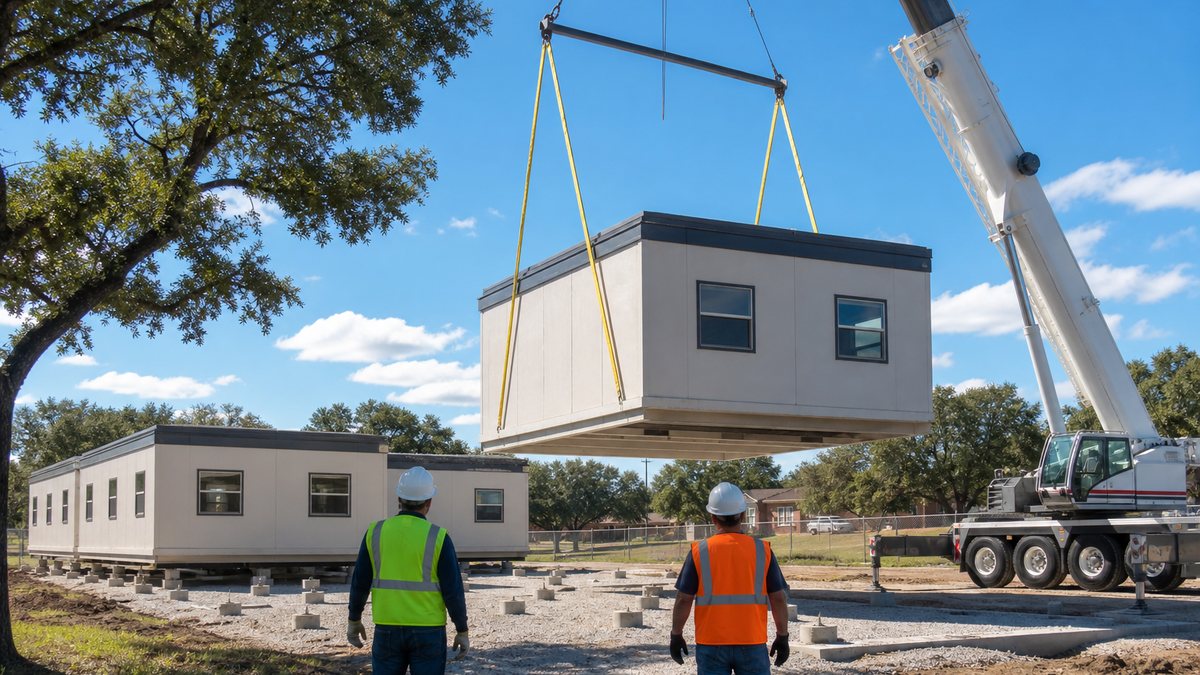
- Delivery, set and removal: transport distance, crane or forklift needs, and the teardown at the end.
- Furniture and fit-out: whether the district moves its own furniture or rents it with the buildings.
Ask every bidder to price these items as separate lines so you can compare quotes fairly. A low building rate with site work "by others" is not a low quote.
Procurement and scheduling tips for districts
Texas school districts buy under Texas Education Code Chapter 44 purchasing rules, which allow several competitive methods and cooperative purchasing. Your purchasing department will choose the method; from the swing-space side, a few habits help:
- Write the swing-space scope into the bond program early. The construction manager's schedule and the swing-space delivery date depend on each other.
- Order before the school calendar forces it. The goal is buildings set, inspected and furnished before students move, usually over a summer or a long break. Factory queues and permits add lead time, so ask suppliers for current schedules when you request quotes.
- Plan the move-out as carefully as the move-in. Removal, site restoration and the return of leased buildings belong in the original scope.
- Keep the paperwork. Data plates, decals, inspection reports and the TEA safety items are easier to document when the supplier provides them with the buildings.
McKinsey's 2019 research on modular construction found schedules can be cut by 20 to 50 percent when factory work overlaps site work. For swing space, that overlap is the main benefit: buildings are made while the site is prepared.
Swing space scenarios across Dallas-Fort Worth
These general scenarios show how the models above play out in different parts of the region. They are illustrations, not descriptions of any district's actual plans.
A replacement elementary school in Dallas
A large urban campus in Dallas has room on its play field. The district sets a modular classroom village with restrooms and an admin building there, fences it from the demolition zone, and keeps buses and parent pickup on the existing loop. After the new school opens, the buildings leave and the field is restored.
A tight suburban site in Arlington or Lancaster
In Arlington or Lancaster, a replacement campus may not have room for both the old school and a modular village. The district moves the school to a vacant building nearby and adds portables to cover extra classrooms, adjusting bus routes for a year or two.
A phased renovation in a mid-cities district
A renovation in Haltom City or North Richland Hills runs wing by wing. A small group of portables and a restroom building serve as rotating swing space while each wing is renovated.
Fast-growing districts on the edge of the metro
In growing areas around Pilot Point, Sanger, Celina and Princeton, the problem is often capacity while the next bond is planned or rebuilt after a failed election. Leased portable classrooms bridge the gap, and the same buildings can later serve as swing space when construction starts.
See every community we cover on our locations page, including Fort Worth, Garland and Mesquite.
Swing-space checklist
- Swing model chosen (on-campus village, vacant campus, separate temporary campus or phased).
- Moving enrollment and room list confirmed with the campus and the architect.
- Support buildings counted: restrooms, admin, nurse, food service, storage, contractor offices.
- TEA safety items specified: door hardware, door numbering, vision panels, glazing, fencing.
- Texas IHB decals and data plates confirmed for every module; recertification checked for used buildings.
- Accessibility: ramps, routes, restrooms; TDLR registration if the project meets the threshold.
- City site permit, fire access and utility plans in progress.
- Foundation design for clay soils, drainage and tie-downs.
- Term, extension terms, relocation and removal priced in writing.
- Move-in and move-out dates tied to the school calendar.
Planning a bond project? Send your district, campus address, student count, term and target move-in date through our quote form or call (702) 738-2218. We will return swing-space options through our network of manufacturers, dealers and installers.
Frequently asked questions
What is swing space in a school construction project?
Swing space is temporary space where students and staff go while their own building is being replaced or renovated. In Texas it is often a group of portable classrooms, restrooms and offices on the same campus or at another site, used for one or more school years and removed when the new building opens.
Do TEA rules apply to portable classrooms used as swing space?
Yes. TEA's school safety rule applies to all instructional facilities owned, operated or leased by a school system and expressly includes modular, portable buildings. TEA's facility standards also define installing a modular building as new construction. Ask your architect which provisions apply to your project.
Why would Dallas ISD remove portables while other schools add them?
Dallas ISD's 2026 bond targets the roughly 700 portables that have been used as long-term classrooms. Swing space is different: it is planned for a specific construction period, specified for that term and removed afterward. Both can be part of a good facilities plan.
Should a district rent, lease or buy swing-space buildings?
Rent for one project with an uncertain term, lease for a multi-year phased program, and consider buying when the same buildings will move from campus to campus over several bond phases or become permanent space later. Compare all three with the full scope priced, including relocation and removal.
How far ahead should swing space be planned?
As early as the bond project schedule. The swing campus has to be designed, permitted, built, set and inspected before students move, usually during a summer or long break. Factory schedules and permits vary, so ask suppliers for current lead times when you request quotes.
Do swing-space classrooms need a city permit in North Texas?
Generally, yes. The state IHB program covers the factory-built modules, but the city handles the site permit, utilities, fire access and final inspection. Outside city limits, Texas uses third-party inspectors for IHB installations. Check with the city where the campus sits.
Can swing space include restrooms and a cafeteria?
Yes. Modular restroom buildings can connect to water and sewer, and food service can range from serving lines in a multipurpose building to a full modular kitchen. Many districts share an existing nearby cafeteria or gym instead when distance allows.
How do we keep students safe next to an active construction site?
Separate the classroom village from the construction zone with fencing, keep construction traffic away from drop-off routes, schedule deliveries outside arrival and dismissal, and use covered walkways. TEA's exterior secured area definition and exterior-door rules help shape the fence and door plan.
Can used portable classrooms be used as swing space?
Often, if each module has a verifiable Texas decal and data plate and has not been altered without recertification. Used buildings should be inspected for floors, roofs, HVAC and door hardware, and upgraded to meet current TEA safety items before students move in.
Does Dallas Modular Structures serve districts outside Dallas?
Yes. We help districts, charter schools and private schools across Dallas-Fort Worth and Texas, including Fort Worth, Arlington, Lancaster, Haltom City, North Richland Hills, Pilot Point, Sanger and dozens of other cities, through our network of manufacturers, dealers and installers.
Related
Also see our modular buildings, classrooms, education buildings, colleges and universities, all building types and industries we serve.
Sources
- NBC 5 Dallas-Fort Worth, Dallas ISD plans 26 new schools after voters approve historic bond (May 4, 2026).
- CBS News Texas, North Texas school bond election results (May 4, 2026).
- Spaces4Learning, Dallas ISD voters approve $6.2B bond package (May 12, 2026).
- Texas Administrative Code, 19 TAC §61.1040, School Facilities Standards.
- Texas Administrative Code, 19 TAC §61.1031, School Safety Requirements.
- Texas Department of Licensing and Regulation, Industrialized Housing and Buildings: Frequently Asked Questions.
- Texas Department of Licensing and Regulation, Architectural Barriers: Texas Accessibility Standards.
- McKinsey & Company, Modular construction: From projects to products (2019).
This guide is general information, not legal, engineering or procurement advice. Rules, bond programs and city procedures change; confirm requirements with TEA, TDLR, your city, your design professional and the supplier before you rent, lease, buy or install modular buildings.