Home › Guides › Modular building rental vs. lease vs. buy
Buyer's guide
Modular building rental vs. lease vs. buy in Dallas-Fort Worth: how to choose
A practical 2026 guide for contractors, schools, plants, churches, clinics and developers across Dallas-Fort Worth: when renting a modular building makes sense, when a longer lease is smarter, when buying wins, what each option really includes, the Texas rules that change with the choice, and the cost factors to compare before you sign.
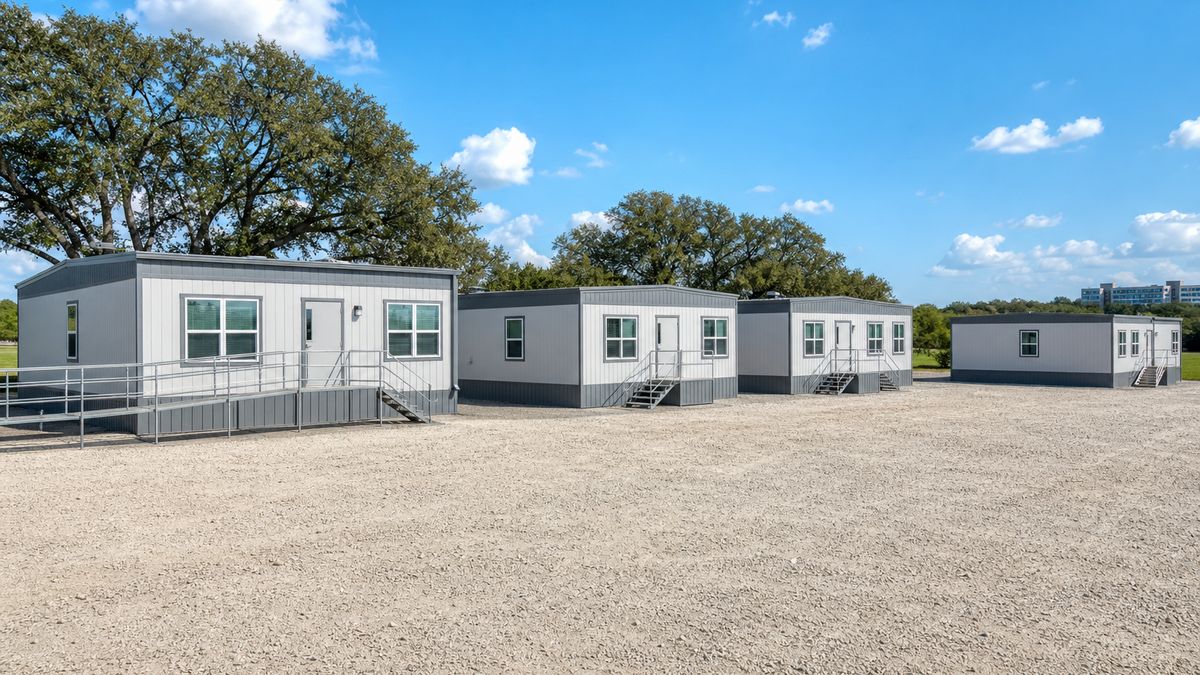
Choosing between modular building rental, a longer lease or an outright purchase is usually the first big decision on any project that needs a mobile office, portable classroom, clinic, break room or storage building in Dallas-Fort Worth. The short answer: rent when you need the building for a defined, short period and want the supplier to own the risk; lease when you need it for several years but don't want to own it at the end; and buy when you will use it for a long time, want to customize it, or plan to move it from site to site yourself. The real answer depends on the term, the site, how much customization you need, your accounting and tax position, and what happens to the building when the job is done. Through our network of manufacturers, dealers and installers, we help DFW buyers compare rental, lease and purchase quotes on the same scope so the decision is based on total cost, not the monthly number.
Quick answer: Rent for short or uncertain terms, such as a construction project, a remodel, an emergency or a pilot program. Lease for multi-year needs where you want a fixed monthly payment and the option to return or upgrade, such as school enrollment growth or a plant expansion. Buy when you expect to use the building for many years, need significant customization or a permanent foundation, or will move it between your own sites. In every case, compare the total cost of the full term: delivery, set-up, foundation or blocking, ramps and steps, skirting, utility connections, permits, insurance, maintenance, and teardown and return. Those one-time costs often decide the answer more than the monthly rate.
This guide is general information, not legal, tax, accounting or engineering advice. Your CPA, your city or county building official, TDLR and the supplier have the final word. If you already know your size, site and term, request a free quote and ask for all three options side by side, or see our sales, lease, rental and relocation services.
Rent, lease or buy: what each one means
The words are often used loosely, so start with clear definitions. Suppliers and contracts differ, but in the modular building market the three options generally work like this:
| Option | Typical term | Who owns it | Typical fit |
|---|---|---|---|
| Rental | Short, often month to month after a minimum term | The supplier | Job site offices, temporary classrooms, remodels, disaster recovery, events, pilots |
| Lease | Fixed multi-year term, set in the contract | The supplier (unless the lease includes a purchase option you use) | School enrollment swings, plant expansions, clinics waiting for a permanent building, multi-year projects |
| Lease-to-own or lease with purchase option | Fixed term with a buyout at the end or credit toward purchase | The supplier until the buyout | Buyers who want low entry cost now and ownership later |
| Purchase (new or used) | Indefinite | You | Long-term or permanent use, heavy customization, buildings you move between your own sites |
Rental and lease units usually come from a supplier's existing inventory of standard buildings, so they can often be delivered sooner than a building made to order, while purchased buildings can be new and built to your plan or used and refurbished. Our used vs. new modular buildings guide covers what to check if you buy used.
The five questions that decide it
Most rent-lease-buy decisions come down to five questions. Answer them honestly before you request quotes.
- How long do you really need the building? Construction schedules slip, bond programs stretch and permanent buildings take longer than planned. Use a realistic term, not the best case.
- How much will you change it? A rental is a standard building you return in the same condition. If you need a custom floor plan, special finishes, lab casework, a commercial kitchen or a permanent look, buying usually fits better.
- What happens at the end? Returning a rental, moving a building to your next site, selling it or keeping it as a permanent building each lead to different answers.
- How do you want to pay? Some organizations prefer operating expenses; others prefer capital spending and ownership. Your CPA, budget rules and, for public entities, procurement rules all matter.
- Who carries the risk? With rentals and many leases, the supplier owns the building and typically handles major repairs. With a purchase, maintenance, insurance and resale are yours.
When renting makes sense
Renting is the default for temporary needs in DFW, and it is the most common way contractors get a mobile office on a job site. Rental tends to win when:
- The need is short or uncertain. A tilt-wall warehouse in Grand Prairie, a road project in Denton County or a remodel that moves staff out of a building for a few months.
- Speed matters. Standard rental units may be available from existing inventory, while custom purchases are built to order. Availability varies by supplier and market, so always confirm.
- You don't want to own the risk. Repairs to the building itself, storage between jobs and resale are the supplier's problem.
- The building is going back on a truck. If the site will be cleared when the job is done, there is little reason to own the building.
The weak spot of renting is time. Monthly charges keep running if a project runs long, and the one-time costs of delivery, set-up and return are paid whether the rental lasts three months or three years. If a "short" rental keeps getting extended, compare what you would have paid on a lease or purchase. Our mobile office trailer rental guide for Dallas covers sizes, cost factors and a checklist for job site rentals.
When a lease makes sense
A lease sits between renting and buying. You commit to a set term, often several years, in exchange for a fixed payment and, in many contracts, more say over the building's configuration. Leasing tends to fit:
- School districts handling enrollment growth while a bond-funded campus is designed and built, or using swing space during renovations. See our portable classrooms guide for DFW schools.
- Plants and distribution centers that need offices, break rooms or training rooms for a multi-year ramp-up but may consolidate later. See our industrial modular buildings guide.
- Clinics and churches that need space now while they raise money for or build a permanent building.
- Developers and home builders with a known build-out period, such as a sales center for a multi-phase community. See our sales office guide.
Read the end-of-term terms closely. Ask what happens if you need to extend, whether you can buy the building at the end and at what price, whether lease payments credit toward a purchase, what return condition is expected, and who pays for teardown and transport back to the supplier's yard.
When buying makes sense
Buying is usually the better choice when the building will be used for a long time or treated like a permanent facility. Purchase tends to win when:
- The use is long-term. Over many years, rent or lease payments can add up to more than the cost of owning, especially for standard buildings that need little maintenance.
- You need customization. A medical clinic, commercial kitchen, daycare or fellowship hall usually has layout and equipment needs a standard rental unit can't meet.
- It goes on a permanent foundation. Once a building is designed for a permanent foundation and full site utilities, it is usually being treated as a permanent asset.
- You move it between your own sites. General contractors, home builders and utilities that open new sites regularly sometimes own a fleet of their own offices and move them from job to job.
- You want resale value. A well-maintained, decaled building can often be sold or relocated later, though value depends on condition, documentation and demand.
Ownership brings responsibilities: insurance, maintenance, property tax on business personal property where it applies, storage between uses, and the cost and paperwork of moving it. If you buy a building that has already been moved and altered, Texas has specific recertification steps; see the used vs. new guide.
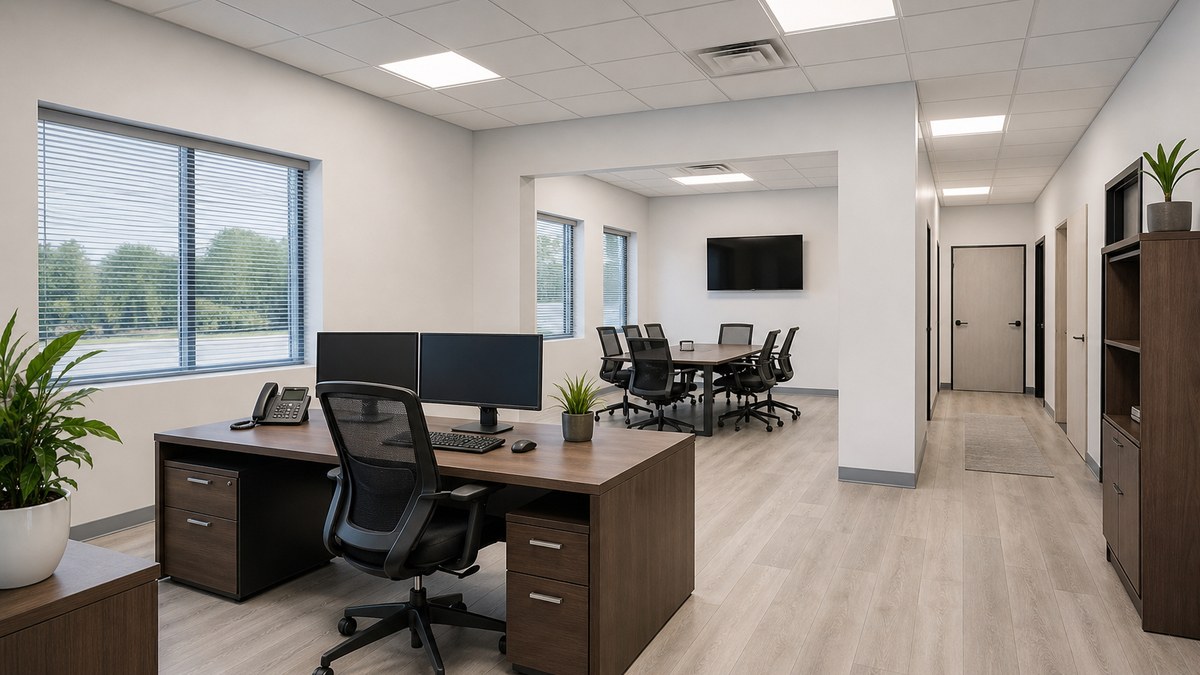
Side-by-side comparison
| Factor | Rent | Lease | Buy |
|---|---|---|---|
| Upfront cash | Lowest: first month plus one-time delivery and set-up | Low to moderate | Highest: purchase price plus site work |
| Flexibility | Highest: return when done (after any minimum term) | Moderate: fixed term, early return may cost extra | You decide, but resale or relocation is on you |
| Customization | Limited to standard options | Some, depending on supplier and term | Full, within code |
| Maintenance of the building | Usually the supplier for major items; check the contract | Varies by contract | You |
| End of term | Teardown and return | Return, renew or buy out | Keep, move or sell |
| Long-term cost | Highest if the need stretches out | Middle | Usually lowest for long or permanent use |
| Best for | Months to a couple of years | Several years | Many years or permanent |
These are general patterns, not rules. A short rental with very high one-time site costs can cost more than a purchased used building you resell later, and a long lease with a good buyout can beat a purchase. Run the numbers for your own term.
Cost factors to compare (no guesswork)
We don't publish prices because they depend on the building, the term, the market and the site. What we can tell you is which items belong in the comparison. Ask every supplier to price the same scope for the same term:
| Cost item | Rent / lease | Buy |
|---|---|---|
| Building | Monthly rate for the term, any minimum term | Purchase price, new or used |
| Delivery and transport | One-time charge, plus return transport at the end | One-time charge; you pay any later moves |
| Set-up | Blocking or piers, leveling, tie-downs, joining modules | Same, or a permanent foundation |
| Ramps, steps, decks and skirting | Often rented as add-ons by the month | Purchased once |
| Site work and utilities | Pad, drainage, power, water, sewer, data: usually your cost either way | Same |
| Permits and inspections | Your cost or passed through | Your cost |
| Insurance and damage waiver | Proof of insurance or a supplier damage waiver | Property insurance on your own asset |
| Maintenance and repairs | Defined in the contract | Yours |
| Taxes | Sales tax treatment of rental charges; ask | Sales tax on the purchase where it applies; business personal property tax where it applies |
| End of term | Teardown, return transport, any cleaning or damage charges | Relocation, storage or resale |
Tip: Add up every line for your realistic term and divide by the number of months. That "all-in monthly cost" is the number to compare across rent, lease and buy, not the monthly rate on the first page of the quote.
Texas rules that change with the choice
The building code side of a modular building does not depend on whether you rent or buy, but some Texas rules do touch the decision.
The Texas decal and relocations
Texas regulates commercial modular buildings through the Texas Department of Licensing and Regulation's (TDLR) Industrialized Housing and Buildings (IHB) program. Buildings in the program are built to the state-adopted codes, inspected in the factory and labeled with a Texas decal on each module. Under the Texas Occupations Code, an unaltered decaled building is generally treated as compliant even when codes change, while an altered movable building may need to meet newer code requirements to the extent the existing building code requires. Rental and lease fleets are typically standard decaled buildings designed to move from site to site. If you buy and later alter a building, or buy one that has been altered, ask about TDLR's recertification process before you move it.
Construction site buildings vs. buildings open to the public
TDLR's IHB program excludes construction site buildings that are not open to the public and are used by the person building the project. A job site office for your superintendent is in that category; a sales office, clinic or classroom that the public uses is not. That matters more than whether you rent or buy, so tell the supplier exactly how the building will be used.
Local permits and site work
Whether rented, leased or bought, the building still needs whatever your city or county requires for zoning, setbacks, foundation, utility connections and inspections. Cities may set time limits on temporary buildings, which can push a project toward renting or toward a permanent purchase. See our modular building permits guide for DFW and our North Texas clay foundations guide.
Accessibility
Any building the public uses needs to be planned for accessibility under the ADA and the Texas Accessibility Standards, and TDLR requires projects with an estimated construction cost of $50,000 or more to be registered for review and inspection. Ramps, landings and accessible routes are part of the cost whether you rent or buy.
Accounting and tax questions to ask your CPA
We are not accountants, and the right answer depends on your organization. These are the questions worth raising before you sign:
- Lease accounting. Under the FASB's lease standard (ASC 842), most leases longer than 12 months are recorded on the lessee's balance sheet, while companies can elect to keep short-term leases of 12 months or less off the balance sheet. Public school districts, cities and counties follow GASB Statement No. 87, which has a similar short-term lease concept. Ask how a 9-month rental and a 36-month lease would each show up in your statements.
- Deducting rent vs. depreciating a purchase. Rent is generally an operating expense for a business, while a purchased building is generally depreciated over time. Ask your CPA how the IRS rules in Publication 946 apply to your building and whether any accelerated options fit.
- Texas sales tax. Texas generally treats the rental and lease of tangible personal property as taxable, under the Comptroller's rule on rentals and leases (34 TAC §3.294). How tax applies to a purchased building, and to a building that becomes part of real property on a permanent foundation, depends on the facts. Ask the supplier how its quote handles tax, and confirm with your tax advisor.
- Business personal property tax. In Texas, businesses report taxable personal property they own or manage as of January 1 to the county appraisal district on a rendition, due April 15 each year, according to the Texas Comptroller. A building you own and that is not part of real property may fall in this category; a rented or leased building is generally reported by its owner. Ask your appraisal district or tax advisor about your situation.
- Public procurement. School districts and other public entities have their own purchasing rules, including cooperative purchasing contracts. Ask your purchasing office which methods are allowed for rentals, leases and purchases.
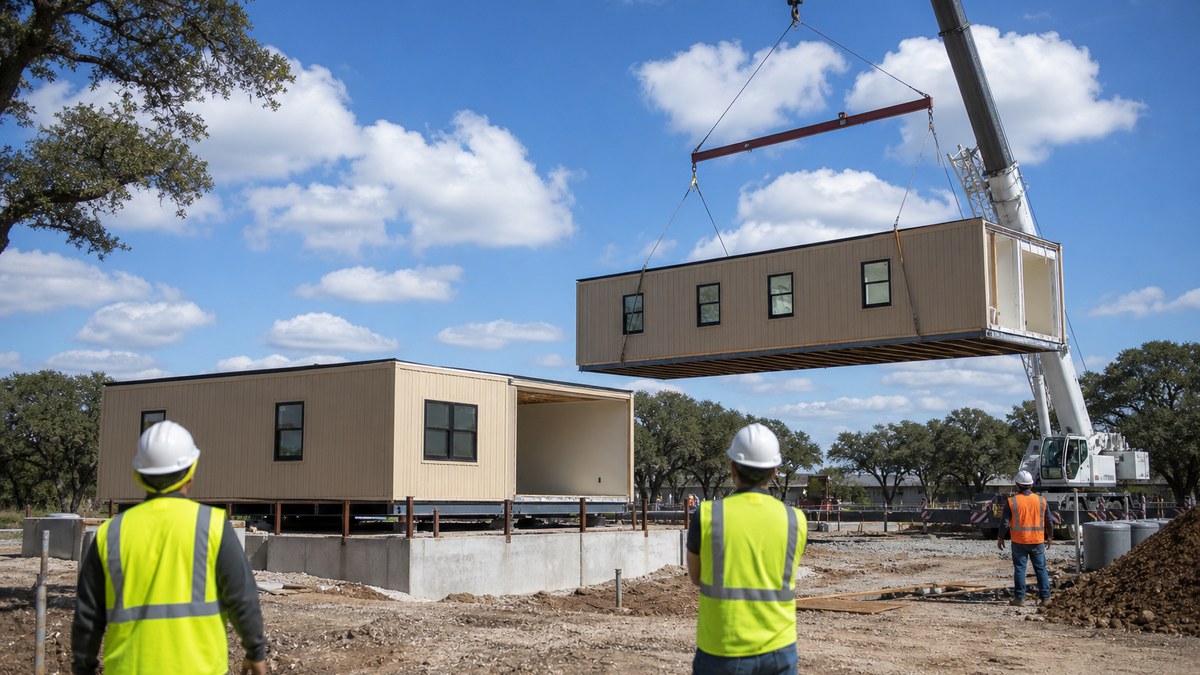
Four DFW scenarios
A general contractor on an 18-month project in Fort Worth
A contractor building a distribution center near Alliance needs a double-wide office and two storage containers for about 18 months. Renting is the natural fit: the site will be cleared at the end, the contractor doesn't want to store or resell the units, and the supplier handles major repairs. The contractor asks for the rental quote to include delivery, blocking, tie-downs, steps, skirting and return so the all-in cost is clear. See our Fort Worth page and storage containers guide.
A school district in Denton County waiting on a bond project
A fast-growing district needs six portable classrooms for three to four school years while a new campus is designed and built. A multi-year lease with an option to extend is a common choice: payments are fixed, the buildings go back when the campus opens, and the district avoids storing unused portables later. The district still plans for accessible ramps and walkways, fire alarm tie-ins and site utilities. See our Denton page and classrooms page.
A clinic in Mansfield planning to stay for years
A healthcare provider wants a small clinic in a growing area and expects to stay at least ten years. Because the building needs exam rooms, plumbing in most rooms and a professional exterior, and will sit on a permanent foundation, buying a building built to plan makes the most sense. See our Mansfield page and medical buildings page.
A home builder opening communities across Collin County
A builder opens new communities in McKinney, Frisco and nearby towns every year. It compares leasing a sales office for each community with buying two standard sales offices and moving them as communities sell out. Because the builder always has a next community, owning can pay off, as long as transport, set-up, ramps and teardown are counted in each move. See our McKinney and Frisco pages.
Common mistakes to avoid
- Comparing monthly rates only. Delivery, set-up, ramps, skirting, utilities and return can be a large share of the total, especially on short terms.
- Underestimating the term. A six-month rental that becomes two years can cost more than a lease or purchase would have.
- Ignoring the end of the term. Teardown, return transport, cleaning and damage charges belong in the budget from day one.
- Customizing a rental. Changes to a supplier's building usually need approval and may have to be reversed at your cost.
- Skipping the insurance terms. Rental contracts usually require proof of insurance or a damage waiver; a building you own needs its own coverage.
- Forgetting Texas weather. Hail and wind damage on a rented building can be charged back to you if the contract says so. Ask how damage is handled and see our hail, wind and heat guide.
- Buying a used building without paperwork. Missing decals or data plates can make relocation and recertification difficult.
Checklist before you request quotes
- Building type and use: office, classroom, clinic, break room, restroom, storage, sales office.
- Size and layout, and whether the public will use it.
- Site address, city or county, and what utilities are available.
- Realistic term, plus your best and worst case.
- What happens at the end: return, move to another site, keep permanently or sell.
- Ask for rental, lease and purchase pricing on the same scope: building, delivery, set-up, ramps and steps, skirting, utility hookups at the building, and removal.
- Insurance requirements, damage waiver terms and who maintains what.
- Purchase option or buyout terms on any lease.
Send that through our quote form or call (702) 738-2218, and we'll return options through our network of manufacturers, dealers and installers. We serve buyers across North Texas and the state; see all cities we serve, including Dallas, Arlington, Irving, Grand Prairie and Plano.
Frequently asked questions
Is it cheaper to rent or buy a modular building?
For short terms, renting is usually cheaper because you avoid the purchase price and resale risk. For long or permanent use, buying is usually cheaper overall because rent payments keep adding up. The break-even point depends on the building, the one-time site costs and your term, so compare the all-in cost of each option for the same period.
What is the difference between renting and leasing a modular building?
A rental is usually a shorter, flexible agreement, often month to month after a minimum term. A lease is a longer, fixed-term contract, often several years, with set payments and sometimes a purchase option. Contracts vary, so read the term, early return, extension and buyout provisions.
How long can you rent a modular building?
Rentals can run from a few months to several years, as long as the supplier and your local permit allow it. If you expect to keep the building for more than a couple of years, ask for a lease or purchase quote too, because long rentals can cost more than either.
Can I buy a modular building I am renting?
Often, yes. Many suppliers offer purchase options on rental or lease units, sometimes with part of the payments credited toward the price. Ask for the terms in writing before you sign, including the building's age, condition and Texas decal documentation.
What costs are included in a modular building rental?
The monthly rate usually covers the building itself. Delivery, set-up, blocking, tie-downs, ramps and steps, skirting, utility connections, permits, insurance or damage waiver and return transport are often separate. Ask every supplier to quote the same full scope so you can compare.
Do rented modular buildings need permits in DFW?
Usually yes. Whether rented or purchased, the city or county controls zoning, setbacks, site permits, utility connections and inspections, and some cities limit how long a temporary building may stay. Check with the building department early.
Is a modular building lease on the balance sheet?
Under the FASB lease standard ASC 842, most leases longer than 12 months are recorded on the lessee's balance sheet, and companies can elect to keep short-term leases of 12 months or less off it. Governments follow GASB Statement No. 87. Ask your CPA how your specific contract will be treated.
Do I pay property tax on a modular building I own in Texas?
It depends on how the building is classified. Texas businesses report taxable business personal property they own as of January 1 to the county appraisal district by April 15. A building that becomes part of real property is handled differently. Ask your appraisal district or tax advisor.
Should a school district rent, lease or buy portable classrooms?
It depends on how long the extra space is needed. Districts bridging the gap to a new campus often lease for a few years, while districts with permanent enrollment pressure or frequent swing-space needs may buy. Compare total cost over a realistic term and follow your purchasing rules.
Can you get rental, lease and purchase quotes for my site?
Yes. Send the building type, size, site location and term, and we will return rental, lease and purchase options through our network of manufacturers, dealers and installers, with delivery and set-up across Dallas-Fort Worth and Texas.
Related
Also see our modular buildings, commercial buildings, storage and office containers, construction and education pages, all building types and industries we serve.
Sources
- Texas Department of Licensing and Regulation, Industrialized Housing and Buildings: Frequently Asked Questions.
- Texas Department of Licensing and Regulation, IHB recertification procedures.
- Texas Occupations Code, Chapter 1202, Industrialized Housing and Buildings.
- Texas Department of Licensing and Regulation, Architectural Barriers: Texas Accessibility Standards.
- Texas Administrative Code, 34 TAC §3.294, Rental and Lease of Tangible Personal Property.
- Texas Comptroller, Texas Businesses: April 15 is Deadline for Filing Property Tax Renditions (April 2026).
- Financial Accounting Standards Board, Leases (Topic 842).
- Governmental Accounting Standards Board, Statement No. 87, Leases.
- Internal Revenue Service, Publication 946, How To Depreciate Property.
This guide is general information, not legal, tax, accounting or engineering advice. Contract terms, Texas rules and local requirements vary; confirm with your CPA, TDLR, your city or county building official and the supplier before you rent, lease or buy a modular building.