Home › Guides › Used vs. new modular buildings in Texas
Buyer's guide
Used vs. new modular buildings in Texas: what to check before you buy
A practical guide for businesses, contractors, schools, churches and property owners in Dallas-Fort Worth and across Texas: when a used or relocated modular building makes sense, when new is the better buy, what the Texas decal and recertification rules mean for a pre-owned unit, and a checklist for inspecting the building before you sign.
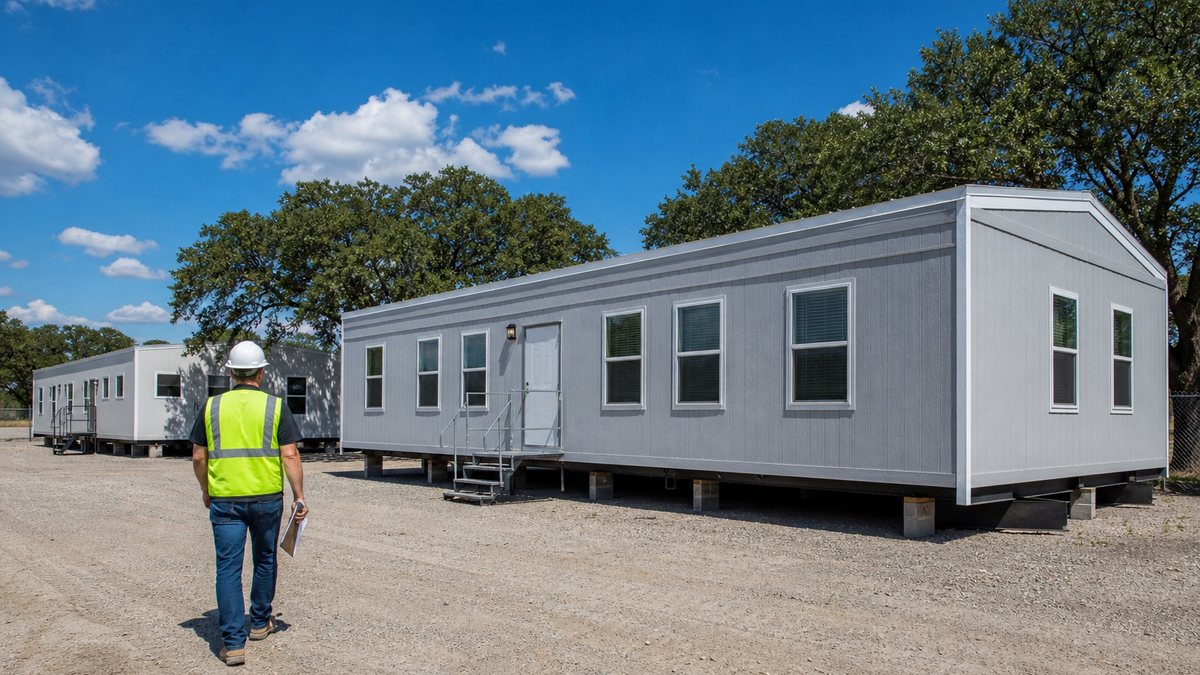
Used vs. new modular buildings in Texas comes down to three questions: does the used building have the paperwork Texas requires, is it in good enough shape to move and reuse, and does the full cost of buying, moving, repairing and permitting it still beat a new building built to your plan? A used mobile office, portable classroom or commercial modular building can save money and time when it fits your needs as-is. It can also turn into a costly project if the Texas decal is missing, the floor is soft or you need major changes. Through our network of manufacturers, dealers and installers, we help buyers in Dallas-Fort Worth and across Texas compare used, refurbished and new options on the same written spec.
Quick answer: Buy used when the building already matches your size and layout, carries its original Texas IHB decal and data plate, passes a hands-on condition inspection, and will not need major alterations. Buy new when you need a specific floor plan, a permanent building, current-code features, a long service life or a manufacturer warranty. Before buying used, check five things: (1) the TDLR decal on each module and the data plate, (2) the original approved plans and any records of past changes, (3) structure, roof, floor, HVAC, electrical and plumbing condition, (4) the cost to tear down, transport, re-set and connect it at your site, and (5) what your city or county will require for the new location. If you plan to alter a used commercial building that is designed to be moved, Texas may require recertification through a design review agency and a third-party inspector.
This guide is general information, not legal, engineering or code advice. TDLR, your local building official and the supplier have the final word. If you already know the size, use and location, request a free quote and ask for used and new options side by side.
Used, refurbished or new: what the terms usually mean
Sellers use these words loosely, so ask exactly what you are getting.
| Term | What it usually means | What to ask |
|---|---|---|
| Used (as-is) | A building that has already been occupied, sold in its current condition | Where is it now, how old is it, is the Texas decal on every module, can I inspect it? |
| Refurbished | A used building with some repairs or cosmetic updates, such as new flooring, paint or HVAC | Exactly what was replaced, by whom, and was anything structural, electrical or plumbing changed? |
| Former rental or lease unit | A building that came off a rental or lease term | Service history, how many times it has been moved, any damage repairs |
| Surplus building | A building a school district, agency or company no longer needs, sometimes sold by bid or auction | Can it be inspected before bidding, who removes it, are the plans and records included? |
| New | Built to your order (or a stock plan) under the current Texas-approved codes | Lead time, approved plans, warranty terms, what is included in delivery and setup |
When a used modular building makes sense
- The layout already fits. A standard double-wide office, a classroom with a restroom or a plain open building used as-is is the best case for used.
- The need is temporary or medium-term. A job site office, a swing space during a remodel or a few years of extra classroom space often doesn't justify a custom new building.
- The budget is fixed and tight. A used building can lower the purchase price, as long as moving, repairs and permits don't eat the savings.
- The building is close. Transport, teardown and re-set are a big share of the cost of a used unit. A building already in North Texas usually costs less to relocate than one several hundred miles away.
- You'll own it and move it again. Contractors who use offices on job after job often buy used and relocate them between projects.
When new is the better buy
- You need a specific floor plan. Clinics, daycares, kitchens and offices with many private rooms rarely match a used unit without changes, and changes trigger extra review.
- The building is permanent. A long-term building on a permanent foundation benefits from new materials, current energy and accessibility features and a full service life.
- The use is regulated. Healthcare, child care, food service and school buildings often carry extra state or local requirements. Starting new can be simpler than proving an older unit meets them. See our guides to modular clinics and modular daycare buildings.
- You want warranty coverage. New buildings usually come with manufacturer warranty terms; used buildings are often sold as-is. Ask for the terms in writing either way.
- The used option needs major work. Once a used building needs a new roof, new HVAC, flooring, ramps and an interior reconfiguration, a new building is often the better long-term value.
Comparing the two on paper is easier when both quotes are built on the same scope. Our modular office buildings guide and sales, lease, rental and relocation services page explain the purchase options in more detail.
Texas rule #1: check the decal and the data plate
Texas regulates commercial modular buildings through the Texas Department of Licensing and Regulation's Industrialized Housing and Buildings (IHB) program. Under Texas Occupations Code §1202.204, the state provides for a decal or insignia on each transportable module to show compliance with the mandatory building codes. Under §1202.252, a city that regulates construction may require that all modules bear an approved decal showing inspection by TDLR. In practice, the decal is the first thing to look for on a used commercial building.
- Find a decal on every module. A double-wide has two modules, so it should have two decals. Write down each decal number and serial number.
- Find the data plate. The data plate lists design information about the building. TDLR's recertification procedures ask for a copy of it, so photograph it.
- Ask for the approved plans. The original construction documents carry the approval stamp. They make any future changes or recertification much easier.
- Ask for the records. TDLR's recertification procedures say that a complete set of records pertinent to a recertification or alteration must be transferred with the units. If the building was recertified before, ask for those records too.
Watch out: TDLR says alteration decals will not be issued if the original Texas decal number cannot be verified in its records, or if records show the decal was lost, destroyed or confiscated. A used building with a missing or unverifiable decal may be very hard to recertify for a new commercial use. Get the decal numbers before you pay a deposit and check them with the supplier and TDLR.
One exception matters for contractors: §1202.204 tells the state to exempt construction site buildings from the decal rule, and TDLR's commercial building guide excludes construction-site offices that are not open to the public and are used by the builder. A used job site trailer can therefore be a simpler purchase than a used classroom or public office. If you later want to use that same trailer as a sales office or a public building, it is treated differently. Our mobile office trailer guide covers job site offices.
Texas rule #2: changes can trigger recertification
TDLR has a recertification process for industrialized buildings designed to be moved from one commercial site to another. It applies when a portable commercial building built under the Texas program is altered, or when its original documents are missing. TDLR sorts these buildings into four classes:
| Class | Situation | What it generally involves |
|---|---|---|
| Class 1 | Original approved documents exist, the building has not been altered before, and alterations are planned | Plans for the changes reviewed by a council-approved design review agency (DRA), then third-party inspections |
| Class 2 | Original approved documents do not exist | As-built documents and a structural analysis by a Texas-licensed engineer, then review and inspection |
| Class 3 | Original documents exist, but the building was altered and not recertified | Original documents plus documents of the past changes, and a structural analysis if structural elements were changed |
| Class 4 | Already recertified, more alterations planned | Review and inspection of the new changes |
Recertification inspections are performed by third-party inspectors registered with TDLR. The inspector verifies the original decal and serial number of each unit, inspects the work and, on successful completion, attaches alteration decals and an alteration data plate. Construction must be done by properly licensed trades, for example a licensed plumber for plumbing.
How much of the building has to meet current codes depends on the scope. TDLR's procedures say that if the cost of alterations is at least 50 percent of the value of the modules, the entire building must comply with the mandatory codes; otherwise, the modified portion must comply. The International Existing Building Code, as adopted and amended by TDLR, governs the work. Since July 1, 2024, the IHB program's mandatory codes include the 2021 International Building Code and 2021 International Existing Building Code.
The practical lesson: buy a used building that fits as-is, or price the recertification before you buy. Moving walls, adding a restroom, changing exits or rewiring a used portable classroom can add design, engineering, inspection and construction cost that the seller's price does not show.
Texas rule #3: unaltered decaled buildings and newer codes
Texas Occupations Code §1202.1535 says an industrialized building that bears an approved decal and has not been modified or altered is considered to comply with a later mandatory code or code amendment. If a building designed to be moved between commercial sites is modified after a new code is adopted, the owner must make the modified building comply to the extent required by the International Existing Building Code adopted by the council. TDLR's recertification procedures also address buildings that are recertified without alterations. These rules interact, so ask the supplier and, if needed, TDLR how they apply to the unit you are buying.
Unaltered does not mean free of local requirements. The city or county where the building will sit still handles zoning, setbacks, site permits, foundations, utility connections and inspections of the on-site work. Under TDLR's guidance, cities cannot require amendments to the mandatory codes for IHB buildings but can enforce zoning and site permits. Our modular building permits guide explains who regulates what in DFW.
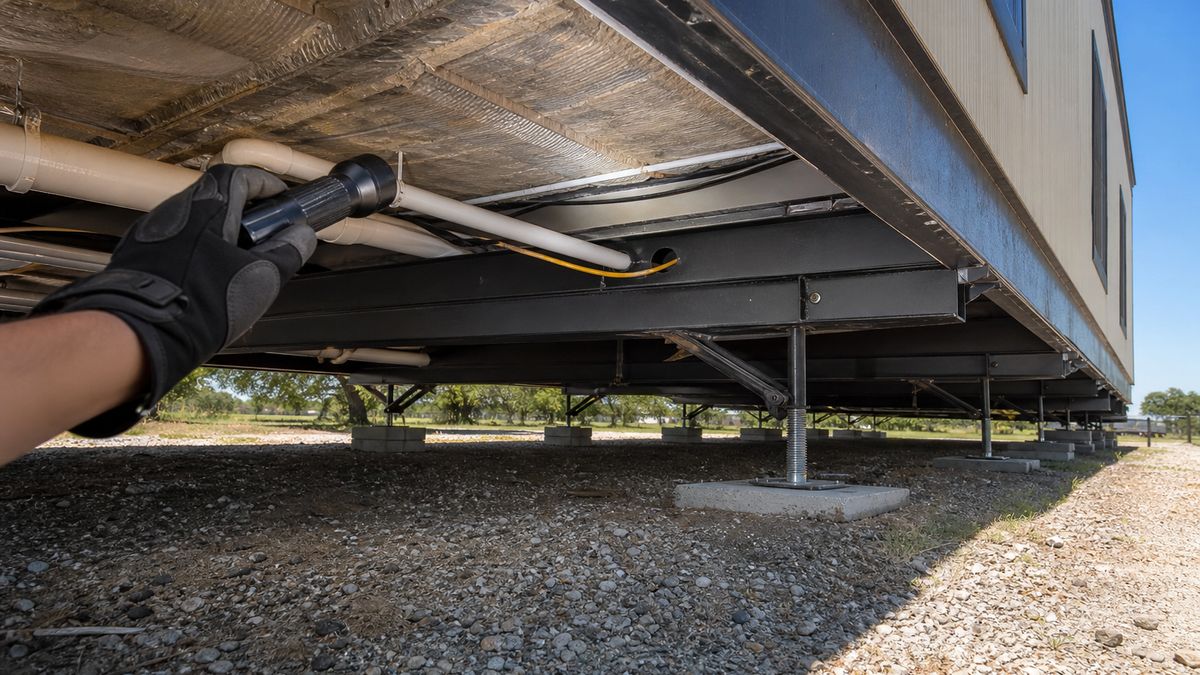
The used modular building inspection checklist
Inspect the building in person, or hire a qualified inspector or contractor to do it, before you commit. Bring a flashlight, a moisture meter if you have one, and a camera.
| Area | What to check | Red flags |
|---|---|---|
| Paperwork | Decal on each module, data plate, approved plans, past recertification records, title or bill of sale | Missing or painted-over decals, no plans, seller unsure where the building came from |
| Chassis and frame | Steel frame, outriggers, cross members, hitch and running gear if it will be towed | Heavy rust, bent or cut members, field welds that look unplanned |
| Floor | Walk every room; check decking near doors, restrooms, sinks and HVAC closets | Soft spots, sagging, swollen decking, stains around plumbing |
| Roof | Membrane or metal roof, seams, flashing, penetrations, gutters | Ponding, patches, hail damage, ceiling stains inside |
| Walls and siding | Exterior siding, trim, sealant at windows and mate lines | Gaps at the marriage line, rot, insect damage, mold odor |
| HVAC | Age and type of units, ductwork, thermostat; run the system | Units near end of life, missing equipment, poor cooling on a hot day |
| Electrical | Panel, breakers, outlets, lighting, exterior disconnects | Scorched outlets, missing covers, amateur wiring, unlabeled panels |
| Plumbing | Fixtures, water heater, supply and drain lines under the floor | Leaks, freeze damage, cut lines that were never capped |
| Doors, windows and ramps | Operation, locks, hardware, ramp and landing condition | Doors that won't close (often a sign of settling or frame damage) |
| Accessibility | Door widths, restroom layout, ramp slope and handrails | Restrooms or entrances that would need rebuilding for your use |
Tip: Doors that stick, cracked drywall at corners and an uneven floor can come from a poor setup on the old site, not from a bad building. Ask how it was blocked and leveled. Still, have a qualified person check that the frame is straight before you buy.
The hidden costs of a used building: moving it
With a used building, the purchase price is only one line of the budget. These items often decide whether used really costs less than new:
| Cost factor | Why it matters |
|---|---|
| Teardown at the current site | Disconnecting utilities, removing skirting, ramps, decks and anchors, separating modules on multi-section buildings |
| Transport | Distance, number of modules, oversize load permits and escorts, axles and tires |
| Site preparation | Pad, grading, drainage and access for trucks and possibly a crane |
| Foundation and anchoring | Blocking and tie-downs or a permanent foundation designed for your site |
| Re-set and finish work | Rejoining modules, sealing the marriage line, roof and interior patching, skirting |
| Utilities | Electrical service, water, sewer or septic, data |
| Repairs and upgrades | Roof, flooring, HVAC, fixtures and anything found during inspection |
| Recertification and permits | Design review, engineering, third-party inspections and local permits |
| Ramps, decks and stairs | Accessible ramps, landings and steps sized for your site |
We don't publish prices because they depend on the building, the market and the site. To compare fairly, ask for a delivered, set and connected price on the used building and on a new one, with the same site, foundation and utility assumptions.
Built for North Texas: what to look for on a used unit
DFW's conditions are hard on buildings, and a used unit has already lived through some of them.
- Heat. North Texas summers are long and hot. Check the age and capacity of the HVAC, the condition of the roof coating and whether insulation under the floor is intact. Older units often benefit from HVAC replacement.
- Hail and storms. Texas is one of the most hail-prone states. Look closely at roofs, rooftop and wall-mounted HVAC units, skylights and siding, and ask whether any storm damage was repaired. Our hail, wind and heat guide covers what to specify.
- Clay soils. Much of Dallas, Tarrant, Collin, Denton and Ellis counties has expansive clay that shrinks and swells with moisture. A building that sat on a poorly drained site may show racking. At the new site, plan drainage and a foundation suited to clay; see our North Texas clay foundations guide.
- Wind. Make sure the new installation has proper anchoring and tie-downs for the location, as specified by the manufacturer, engineer and local jurisdiction.
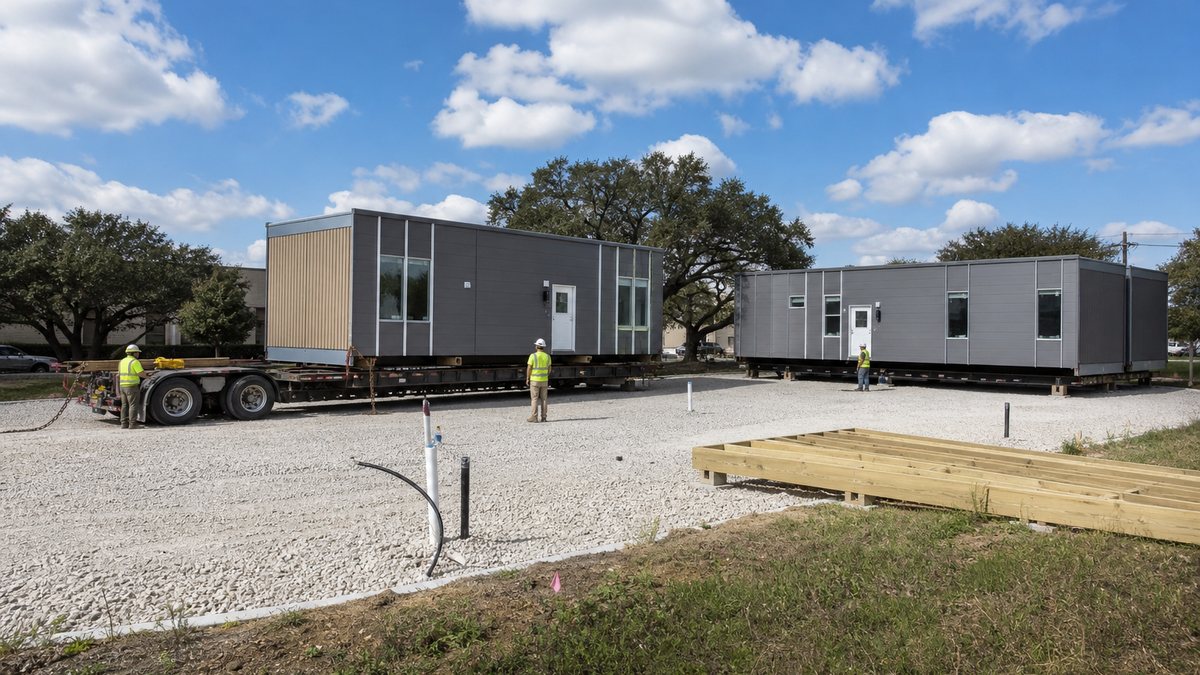
Used vs. new at a glance
| Question | Used | New |
|---|---|---|
| Floor plan | What exists, unless you alter it | Built to your plan or a stock plan |
| Codes | Code edition it was approved under; alterations may need recertification | Current Texas-approved codes |
| Availability | Depends on what is on the market near you | Depends on factory schedules |
| Condition | Varies; needs inspection | New materials and equipment |
| Warranty | Often sold as-is | Manufacturer warranty terms |
| Best for | Job sites, swing space, simple offices and classrooms that fit as-is | Permanent, custom or regulated buildings |
Four DFW scenarios
A contractor in Denton buying used job site offices
A general contractor with steady work across Denton County wants to stop renting. Used single-wide office trailers used only by its own staff at construction sites fall under TDLR's construction-site office exclusion, so the purchase is mainly a condition check, a transport plan and local placement permits. The contractor buys two, inspects the floors and HVAC, and moves them from job to job. See our Denton modular buildings page.
A church in Mansfield adding classroom space
A church wants a double-wide classroom building for Sunday school. A used portable classroom with its decals, data plate and plans fits the need without changes. Because the building will be used by the public, the church confirms the decals with the supplier, budgets accessible ramps and checks the city's permit requirements before buying. See our Mansfield page and our modular church buildings guide.
A private school in Princeton weighing used vs. new
A growing private school finds used classrooms at a good price, but each needs a restroom added and walls moved. Once design review, engineering, recertification inspections, plumbing work and ramps are added, a new building built to its plan compares well. The school gets both quotes on one spec and decides with the full numbers. See our Princeton page and the portable classrooms guide.
A business in Fort Worth needing a permanent office
A company wants a permanent office with private offices, a conference room and restrooms on a permanent foundation. New is the simpler path: the building is designed to its layout under current codes, the foundation is engineered for the site and the city permits the on-site work. See our Fort Worth page.
Common mistakes when buying a used modular building
- Paying a deposit before checking the decals. Missing or unverifiable decals can block future recertification.
- Comparing the used purchase price with a new delivered price. Compare delivered, set and connected prices.
- Planning big changes to a used unit. Alterations can trigger design review, engineering and third-party inspections.
- Skipping the under-floor inspection. Floor, chassis and plumbing problems hide under the building.
- Forgetting local permits. The new site's city or county still controls zoning, site work and utility connections.
- Ignoring the change of use. A job site trailer used later as a public office or sales office is treated differently under Texas rules.
- Assuming a warranty. Many used buildings are sold as-is; get any warranty in writing.
Checklist before you request quotes
- How you will use the building, who will use it, and whether it is temporary or permanent.
- Size, layout and features you need (offices, classrooms, restrooms, kitchen, storage).
- Site address, and whether it is inside city limits or in unincorporated county land.
- Whether you are open to used, refurbished and new options, and your target date.
- For a specific used building: its location, photos, decal numbers, data plate, plans and records.
- Utilities available at your site and any foundation requirements.
- Purchase, lease or rent-to-own preference.
Send that through our quote form or call (702) 738-2218, and we'll return used and new options through our network of manufacturers, dealers and installers. We serve buyers across Texas; see all cities we serve, including Dallas, McKinney, Waxahachie and Weatherford.
Frequently asked questions
Is it cheaper to buy a used modular building than a new one in Texas?
Often the purchase price of a used building is lower, but the total cost includes teardown, transport, site preparation, foundation, re-set, utilities, repairs, any recertification and local permits. Compare a delivered, set and connected price for both used and new on the same site and scope before deciding.
What is a TDLR decal on a modular building?
Texas provides for a decal or insignia on each transportable module of a commercial industrialized building to show it was built under the Texas Industrialized Housing and Buildings program and complies with the mandatory building codes. Cities may require that every module bear an approved decal, so check for one on each module of a used building.
Can I buy a used modular building that has no Texas decal?
You can buy it, but using it as a commercial building may be difficult. TDLR says alteration decals will not be issued if the original Texas decal number cannot be verified, or if the decal was recorded as lost, destroyed or confiscated. Construction-site offices used only by the builder are an exception, so confirm the intended use before buying.
What is recertification of a modular building in Texas?
Recertification is TDLR's process for industrialized buildings designed to be moved between commercial sites when they are altered or their original documents are missing. Plans are reviewed by a council-approved design review agency, a third-party inspector registered with TDLR inspects the work, and alteration decals and an alteration data plate are attached when it passes.
Does a used modular building have to meet current building codes?
Texas law says an industrialized building with an approved decal that has not been modified or altered is considered to comply with later code changes. If you alter it, the altered work, and the whole building if alteration costs reach 50 percent of the module value, must meet the codes as required under TDLR's rules. Local zoning and site permits still apply.
What should I inspect on a used modular building?
Check the decal on every module, the data plate and the plans, then the chassis and frame, floor, roof, walls and siding, HVAC, electrical panel and wiring, plumbing, doors, windows, ramps and accessibility features. Look for soft floors, roof leaks, rust, unplanned welds and doors that stick, and have a qualified person inspect anything structural.
Can a used portable classroom be turned into an office?
Often yes, if the layout works as-is. If walls, restrooms, exits or wiring need to change, the work on a portable commercial building may need recertification through a design review agency and a third-party inspector, plus local permits for the site. Price those steps before buying.
Do I need a permit to move a used modular building to my property in DFW?
Usually yes. The city or county where the building will sit handles zoning, setbacks, site permits, foundations and utility connections, and may require a final inspection before occupancy. Transport of oversize modules also needs road permits arranged by the hauler. Check with the local building official early.
Do used modular buildings come with a warranty?
Many used buildings are sold as-is, while new buildings usually come with manufacturer warranty terms. Some refurbished buildings include limited coverage on replaced components. Ask for any warranty terms in writing before you buy.
Can you find both used and new modular buildings for my project?
Yes. Send us the size, use, location and timing, and we will return used, refurbished and new options through our network of manufacturers, dealers and installers across Dallas-Fort Worth and Texas, quoted on the same scope so you can compare them fairly.
Related
Also see our portable classrooms, commercial buildings and construction pages, all building types and industries we serve.
Sources
- Texas Department of Licensing and Regulation, Recertification Procedures for Industrialized Buildings designed to be moved from one commercial site to another.
- Texas Department of Licensing and Regulation, Information Packet: Recertification Inspections.
- Texas Occupations Code, Chapter 1202, Industrialized Housing and Buildings (§§1202.1535, 1202.204, 1202.252).
- Texas Department of Licensing and Regulation, Industrialized Buildings: Commercial Building Guide.
- Texas Department of Licensing and Regulation, IHB building site inspections and local permits.
- Texas Department of Licensing and Regulation, Industrialized Housing and Buildings program.
This guide is general information, not legal, engineering or code advice. Texas rules and local requirements change and depend on the building and the site; confirm with TDLR, your local building official, a qualified inspector and the supplier before you buy, move or alter a modular building.