Home › Guides › Modular buildings in Dallas, TX
Dallas buyer's guide
Modular buildings in Dallas, TX: a 2026 guide to building types, permits, sites and quotes
Everything a Dallas business, school, church, clinic, contractor or public agency needs to know before adding a modular building inside the city: which building fits which job, how Texas and the City of Dallas split the rules, what Dallas sites demand, the cost factors that drive a quote, and how to get comparable prices.
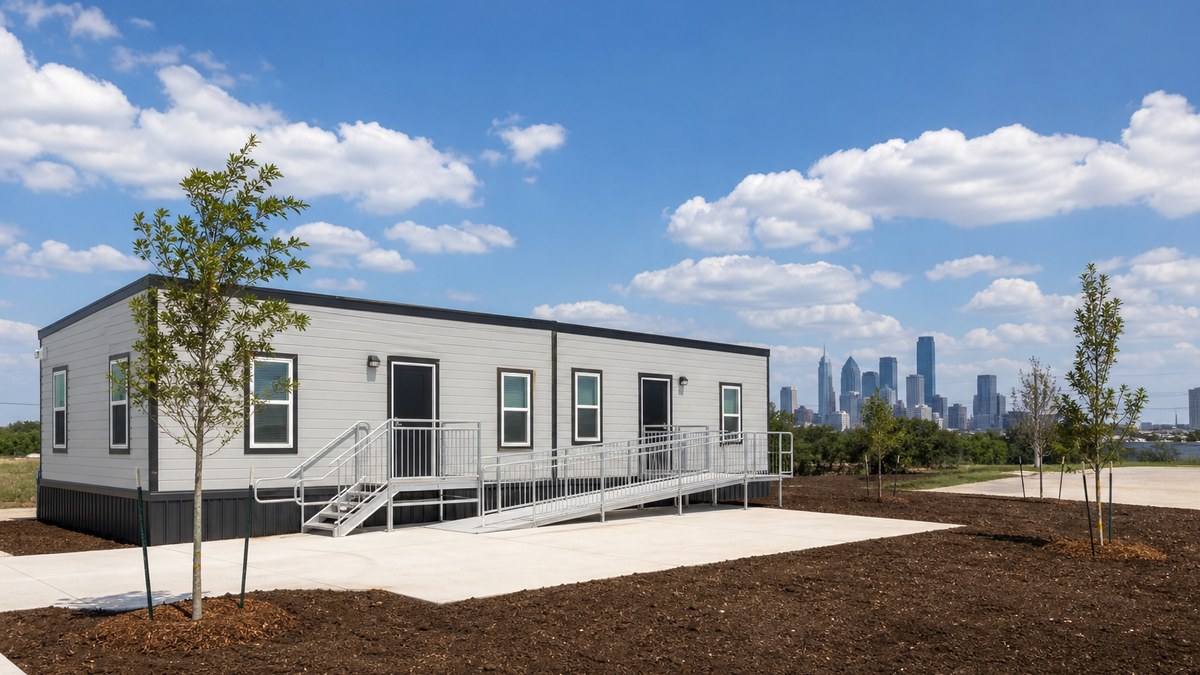
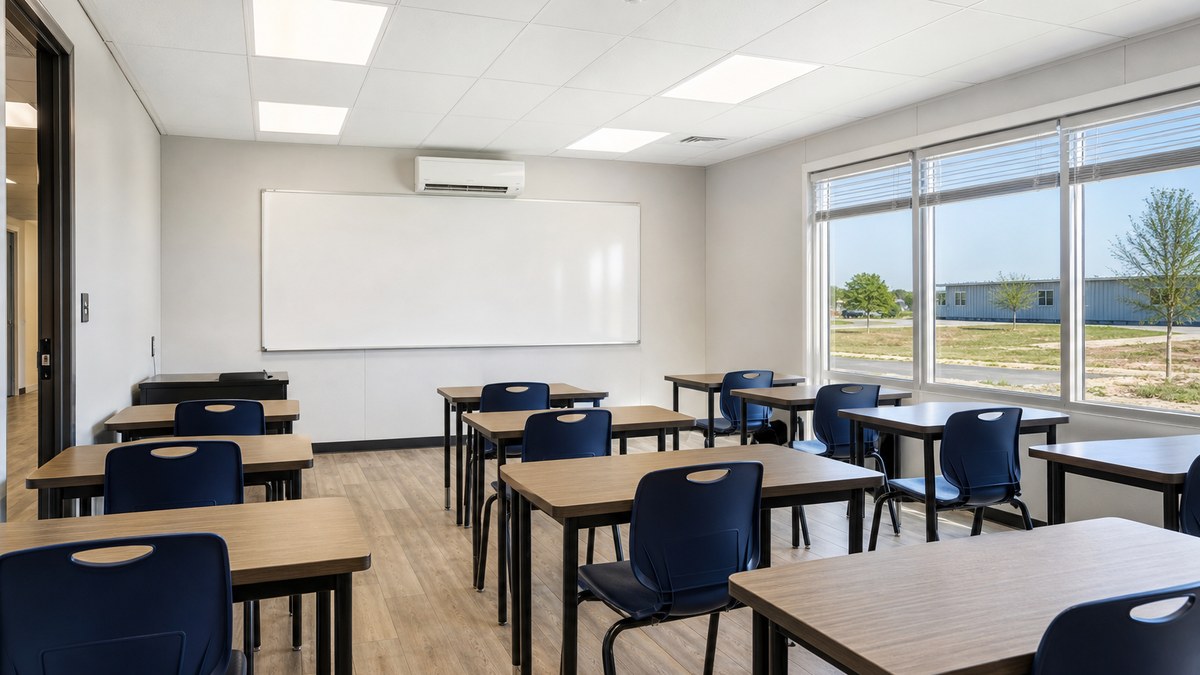
A modular building in Dallas, TX is a commercial building made in one or more factory-built sections, inspected under the Texas Industrialized Housing and Buildings program, then trucked to a Dallas site and set on blocking, piers or a permanent foundation. Dallas buyers use them for mobile offices, portable classrooms, clinics, restrooms, break rooms, kitchens, sales offices, guard booths, storage and multi-module office buildings. The short version: pick the building type and term first, check zoning for your exact parcel, plan the site (utilities, access, foundation on Dallas clay), and compare quotes that include delivery, set-up and permits, not just the building. Through our network of manufacturers, dealers and installers, we help Dallas buyers rent, lease or buy the right building and compare full-scope quotes.
Quick answer: To put a modular building on a site in Dallas, you generally need (1) a building that carries a Texas IHB decal (or is clearly excluded from the program, like a construction-site office used only by the builder), (2) zoning that allows your use on that parcel, (3) a City of Dallas permit for the site work, foundation or set-up, utilities and any accessibility work, and (4) a passed final inspection before anyone occupies it. Rent for short or uncertain terms, lease for multi-year needs, buy for long-term or customized buildings. Ask for quotes that list delivery, set-up, foundation, steps and ramps, skirting, utility hookups and removal separately.
This guide is general information, not legal or engineering advice. The City of Dallas, TDLR and your design professional have the final word for your site. If you already know your size and address, request a free quote or call (702) 738-2218. For the city overview, see our modular buildings in Dallas page.
Why Dallas organizations choose modular buildings
Dallas is the center of one of the fastest-growing regions in the country. The U.S. Census Bureau's 2025 city and town estimates again put several North Texas suburbs among the fastest-growing places in the nation, and that growth lands on Dallas roads, schools, hospitals, job sites and warehouses. Modular buildings fit that pace for a few practical reasons:
- Schedule. The building is made in a factory while the site is prepared, so the two steps overlap. Research from McKinsey (2019) found modular approaches can cut project schedules by 20 to 50 percent. Your result depends on the building, the factory queue and permits.
- Flexibility. Many modular buildings can be rented or leased, then returned or moved when the need ends, which suits construction projects, enrollment swings and temporary clinic space.
- Predictable quality. Factory work happens indoors, out of Dallas summer heat and spring storms, and Texas-labeled commercial modules are inspected under state rules before they ship.
- Less disruption. Most of the noise, deliveries and labor happen off site, which matters on busy school campuses, hospital grounds and occupied commercial properties.
Which modular building fits your Dallas project?
Start with what the building has to do and for how long. The table below matches common Dallas needs to the building type to ask for.
| Dallas need | Building type | Typical term | Learn more |
|---|---|---|---|
| Job site office for a GC, utility or public-works project | Single-wide or double-wide mobile office | Months to a few years | Mobile offices |
| Extra classrooms during enrollment growth or campus renovation | Portable classroom or classroom complex | A few school years or permanent | Portable classrooms |
| Clinic, testing site, urgent care or medical office | Modular medical building | Temporary or permanent | Medical buildings |
| Restrooms for crews, events or public sites | Restroom trailer or modular restroom building | Days to permanent | Restroom buildings |
| Kitchen during a remodel, or a permanent food-service building | Modular commercial kitchen | Months or permanent | Modular kitchens |
| Sales center for a new community or apartment lease-up | Modular sales office | Life of the sales program | Sales offices |
| Crew housing for large projects | Modular dorms and workforce housing | Project length | Workforce housing |
| Secure storage for tools, materials or records | Storage or office container | Weeks to years | Storage & office containers |
| Permanent office, retail or government space | Multi-module commercial building | Permanent | Commercial buildings |
Not sure which category you are in? Our building types and industries pages cover the full range, including government buildings, churches and industrial facilities.
Who uses modular buildings in Dallas
Almost every sector in the city has a reason to use modular space. These are the most common Dallas scenarios we see in quote requests:
Construction and infrastructure
Highway, transit, utility and private projects across Dallas need field offices, plan rooms, break rooms, restrooms and secure storage, often within days of mobilization. These buildings are usually rented, and many construction-site offices used only by the builder fall outside the state modular program. See our construction industry page and the mobile office trailer rental guide.
Schools and colleges
Dallas has many public school districts serving different parts of the city, plus private schools, charter schools and colleges. Portable classrooms bridge gaps during bond construction, absorb enrollment shifts and house special programs. Portable buildings used primarily as educational facilities are treated as industrialized buildings under Texas law, so they need the state label. Read our portable classrooms guide and education page.
Healthcare
Hospitals and clinic groups use modular buildings for overflow, testing, imaging support, staff space and permanent satellite clinics. These are public-facing buildings, so state labeling, accessibility and fire safety all apply. See modular medical clinics in Texas and our medical industry page.
Industrial, logistics and data centers
Southern Dallas County is one of the busiest distribution areas in Texas, and data center construction keeps growing across the region. Warehouses and plants use in-plant offices, guard booths, break buildings and restrooms. See our guides to industrial modular buildings, guard shacks and data center construction sites.
Churches, nonprofits and government
Congregations add fellowship halls and classrooms; agencies add offices, training rooms and service centers. Read modular church buildings in DFW and see government.
Texas rules vs. City of Dallas rules
The most common confusion for Dallas buyers is who regulates what. The short answer: the state regulates the building, the city regulates the site.
| Topic | Who handles it | What it means for you |
|---|---|---|
| Building design and factory construction | TDLR Industrialized Housing and Buildings program | Commercial modules are built to the mandatory state codes, reviewed and inspected, then labeled with a Texas decal. The 2021 International Building Code family has been in effect for IHB buildings since July 1, 2024. |
| Zoning, setbacks, parking and site plan | City of Dallas (Dallas Development Code, Chapter 51A) | Your use must be allowed in the parcel's zoning district. Planned developments and overlay districts can add conditions. |
| Site permits, foundation, utilities and final inspection | City of Dallas Development Services | Cities can require permits, inspections and a passed final before a labeled building is occupied. |
| Accessibility | ADA and Texas Accessibility Standards (TDLR) | Public-facing buildings need accessible routes, ramps, entrances and restrooms. Projects at or above $50,000 estimated cost generally need TAS registration. |
| Floodplain, fire lanes, water and sewer taps | City departments and utilities | Sites near the Trinity River or other creeks can face floodplain rules; fire access and utility capacity must be confirmed early. |
Texas Occupations Code Chapter 1202 lets cities require that each module carries an approved state decal, require local permits and inspections, and withhold occupancy until the building passes a final inspection. At the same time, cities generally may not require changes to the state's mandatory building codes for a labeled building, and they may not ban industrialized buildings from the city or limit them to manufactured-housing zones. They keep their zoning, setback and site-planning power. Our modular building permits guide explains this in more detail.
Tip: Not every modular unit is inside the state program. TDLR's guidance excludes construction-site buildings that are not open to the public and are used by the person doing the construction, and commercial buildings on temporary foundations that are either not open to the public or under 1,500 square feet and not used as a school or place of worship. A sales office or clinic that receives the public is different. Confirm which side of the line your building falls on before you order.
How permitting works in the City of Dallas
The City of Dallas handles building permits through its Development Services department. The Permit Center at the Oak Cliff Municipal Center (320 E. Jefferson Blvd.) is the city's one-stop shop for construction and development information, and staff are available for consultation before you apply. The city also offers an expedited plan review program called Q-Team and zoning verification letters for a fee. Steps and fees change, so check the city's site for current procedures. A typical path for a modular building looks like this:
- Confirm zoning. Look up the parcel's zoning district and any planned development conditions. In the Dallas use charts we reviewed, a "temporary construction or sales office" is listed as permitted by right in several districts, but conditions and time limits can apply and other districts differ. A zoning verification letter or a pre-application conversation with staff removes the guesswork.
- Prepare a site plan. Show the building footprint, setbacks, parking, accessible route, fire access, utility connections and drainage.
- Gather the building documents. For a labeled building: the approved state plans, the decal or data plate information and the installation instructions. For an excluded building: the description that shows why it is excluded.
- Foundation design. Permanent foundations are designed by a Texas-licensed engineer or architect. Temporary set-ups on blocking with tie-downs and ground anchors need city acceptance.
- Submit, respond to comments, get the permit. Plan for review comments on site items such as parking, landscaping and utilities.
- Deliver, set, connect and inspect. Inspections usually cover the foundation, the set and tie-downs, utility connections and the final. Do not occupy until the final passes and any required certificate of occupancy is issued.
Many Dallas sites are near city lines. A parcel that looks like Dallas may actually be in Irving, Garland, Mesquite, Richardson, Farmers Branch, University Park or Highland Park, each with its own permit office. The City of Dallas also extends into Collin, Denton, Kaufman and Rockwall counties, so confirm the jurisdiction before you design anything.
Site planning for Dallas conditions
The building is the easy part. Most delays and surprise costs come from the site. Plan these Dallas-specific items early:
Expansive clay soils
Much of Dallas sits on clay soils that swell when wet and shrink in drought. That movement can rack a building set on poorly prepared blocking and can crack slabs and steps. A geotechnical report, proper pad preparation, drainage that moves water away from the building, and a foundation designed for the soil are worth the cost. Our guide to foundations on North Texas clay covers piers, blocking, slabs and tie-downs.
Heat, hail and wind
The National Weather Service in Fort Worth reports that the area's average first 100-degree day falls in early July, and spring hailstorms are a regular risk across North Texas. Ask for HVAC sized for Dallas summers, reflective or well-insulated roofing, shaded entries, impact-resistant roofing where it matters, and tie-down systems designed for the required wind speed. See hail, wind and heat: modular buildings for Texas weather.
Access, utilities and timing
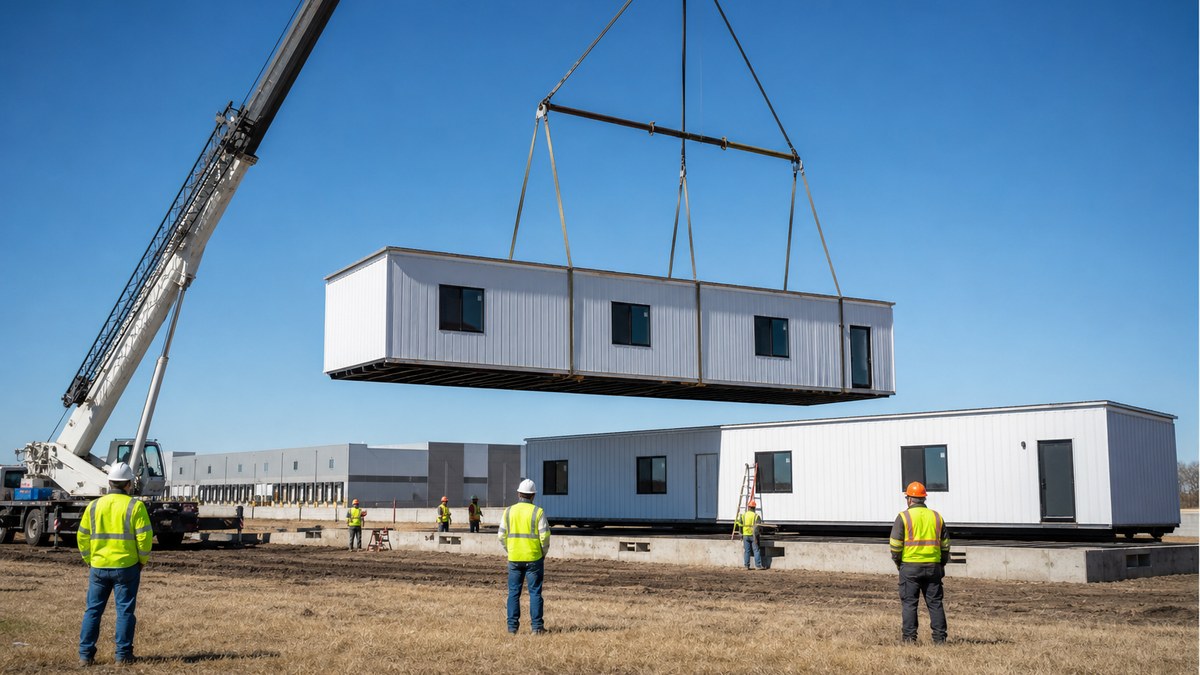
Delivery trucks and, for larger buildings, a crane need a clear path from the street. Dense urban lots near Downtown, Uptown, Deep Ellum or the Medical District can need lane closures and careful scheduling, while large greenfield sites in southern Dallas need a stable haul road after rain. Ask the utility and the city about electric service, water and sewer taps early, because utility work is often the longest lead item.
What affects the cost of a modular building in Dallas
We do not publish prices because they depend on too many project details, and a number without a scope is misleading. These are the factors that move a Dallas quote:
| Cost factor | Why it matters |
|---|---|
| Size, layout and number of modules | More modules mean more factory work, transport and crane time. |
| New vs. used, and rent vs. lease vs. buy | Changes the payment structure and who owns maintenance and the building at the end. See rental vs. lease vs. buy and used vs. new modular buildings. |
| Occupancy and code requirements | Classrooms, clinics and kitchens need more fire, plumbing, ventilation and accessibility features than a staff-only office. |
| Foundation type | Blocking with tie-downs costs less up front than piers or a slab, but may not suit long-term or public use. |
| Site work and utilities | Pad preparation, drainage, utility runs and taps can rival the building cost on difficult sites. |
| Accessibility package | Ramps, landings, accessible restrooms and routes to parking. |
| Delivery distance and site access | Escorts, crane size and urban logistics add cost. |
| Finishes and options | Flooring, windows, security features, IT and furniture. |
| Permits, design and inspections | Engineering, plan review, TAS registration and third-party inspections where required. |
| Removal and return | For rentals and leases, teardown and return freight are often billed at the end. |
Tip: Ask every supplier to price the same scope line by line. A low building price with "site work by others" is not cheaper than a complete quote. Get our help comparing options on the sales, lease, rental and relocation services page.
A simple timeline for a Dallas project
Every project is different, so treat this as an order of steps rather than a schedule:
- Define the need. Use, occupant count, size, term, budget and target move-in date.
- Check the site. Zoning, jurisdiction, floodplain, utilities and access.
- Request quotes. Ask for rental, lease and purchase options if you are unsure, with all site costs listed.
- Design and permit. Site plan, foundation design, accessibility and city submittal. A standard rental unit can often move faster than a custom building, which must wait for factory design and state plan approval.
- Prepare the site while the building is made or staged.
- Deliver, set, connect and finish. Steps, ramps, skirting, utilities and final touches.
- Inspect and occupy. Pass the final and any required certificate of occupancy.
Dallas neighborhoods and nearby cities we cover
We arrange modular buildings for sites across the City of Dallas, from Downtown, Uptown and the Design District to Oak Cliff, Pleasant Grove, Lake Highlands, Far North Dallas and the southern Dallas industrial corridor along I-20 and I-45. Nearby, we also cover Grand Prairie, Duncanville, DeSoto, Lancaster, Hutchins, Wilmer, Balch Springs, Seagoville, Addison and Plano, plus Fort Worth and the rest of the metro. See every city on our locations page.
Ready to price a building? Send your address, building type, size and term through our quote form or call (702) 738-2218. We will return options through our network of manufacturers, dealers and installers.
Frequently asked questions
Do I need a permit for a modular building in Dallas, TX?
Usually, yes. The state program covers the factory-built building, but the City of Dallas handles zoning, site permits, foundation and utility work, and the final inspection. Even a temporary office can need a permit for set-up and utilities. Confirm with Dallas Development Services for your address.
Can the City of Dallas ban modular buildings?
Texas law generally does not let cities ban industrialized buildings from city limits or limit them to manufactured-housing zones, and cities generally cannot require changes to the state's mandatory codes for a labeled building. Cities do keep their zoning, setback, site-planning, permit and inspection powers.
Is a construction trailer the same as a modular building?
Not always. A construction-site office used only by the builder and not open to the public is generally excluded from the Texas industrialized buildings program. A sales office, classroom or clinic that the public uses is treated differently and usually needs the Texas label.
How long does it take to get a modular building in Dallas?
It depends on whether a standard unit is available, the building's complexity, factory schedules, permit review and site work. A standard rental office can be much faster than a custom multi-module building. Ask each supplier for a schedule that includes permits and site work.
How much does a modular building cost in Dallas?
There is no reliable single number. Cost depends on size, use, new or used, rent or buy, foundation, site work, utilities, accessibility, finishes and delivery. Ask for a line-item quote that includes everything from delivery to removal so you can compare offers fairly.
What foundation does a modular building need on Dallas clay?
Temporary buildings are often set on blocking with tie-downs and ground anchors if the city accepts it. Long-term or public buildings often use piers or a slab designed by a Texas-licensed engineer. A soil report and good drainage help limit movement from expansive clay.
Do modular buildings in Dallas need to be ADA accessible?
Buildings open to the public or used by employees generally need to meet the ADA and the Texas Accessibility Standards, including ramps, entrances, routes and restrooms. Projects at or above $50,000 estimated cost generally need TAS registration with TDLR. Some construction-site facilities are exempt.
Can I rent a modular building in Dallas instead of buying?
Yes. Rental suits short or uncertain terms, leasing suits multi-year needs, and buying suits long-term or customized use. Compare the total cost over your realistic term, including delivery, set-up and return.
Which agency inspects modular buildings in Texas?
The Texas Department of Licensing and Regulation runs the Industrialized Housing and Buildings program, which covers design review and in-plant inspection by council-approved third parties. The local building official inspects the site work and the installed building before occupancy.
Do you serve cities around Dallas too?
Yes. We arrange modular buildings across Dallas-Fort Worth and Texas, including Irving, Garland, Mesquite, Richardson, Grand Prairie, Plano, Fort Worth and dozens of other cities, through our network of manufacturers, dealers and installers.
Related
Also see our modular buildings, commercial buildings, mobile offices, classrooms, all building types and industries we serve.
Sources
- Texas Department of Licensing and Regulation, Industrialized Housing and Buildings: Frequently Asked Questions.
- Texas Department of Licensing and Regulation, IHB Installation Permit Information.
- Texas Occupations Code, Chapter 1202, Industrialized Housing and Buildings.
- Texas Department of Licensing and Regulation, Architectural Barriers: Texas Accessibility Standards.
- City of Dallas, Development Services Permit Center.
- City of Dallas Planning, Land uses handout (use chart excerpt).
- U.S. Census Bureau, Vintage 2025 city and town population estimates (May 2026).
- McKinsey & Company, Modular construction: From projects to products (2019).
- National Weather Service Fort Worth, climate information for Dallas-Fort Worth.
This guide is general information, not legal or engineering advice. Codes, city procedures and zoning change; confirm requirements with the City of Dallas, TDLR, your design professional and the supplier before you buy, rent or install a modular building.