Home › Guides › Modular buildings in Fort Worth, TX
Fort Worth city guide
Modular buildings in Fort Worth, TX: a 2026 guide to building types, permits, sites and quotes
Fort Worth passed one million residents, its north side is adding millions of square feet of industrial space, and voters approved an $845 million city bond in May 2026. This guide explains which modular buildings Fort Worth projects use, how the city and Texas regulate them, what to plan on a Tarrant County site and how to get comparable quotes.
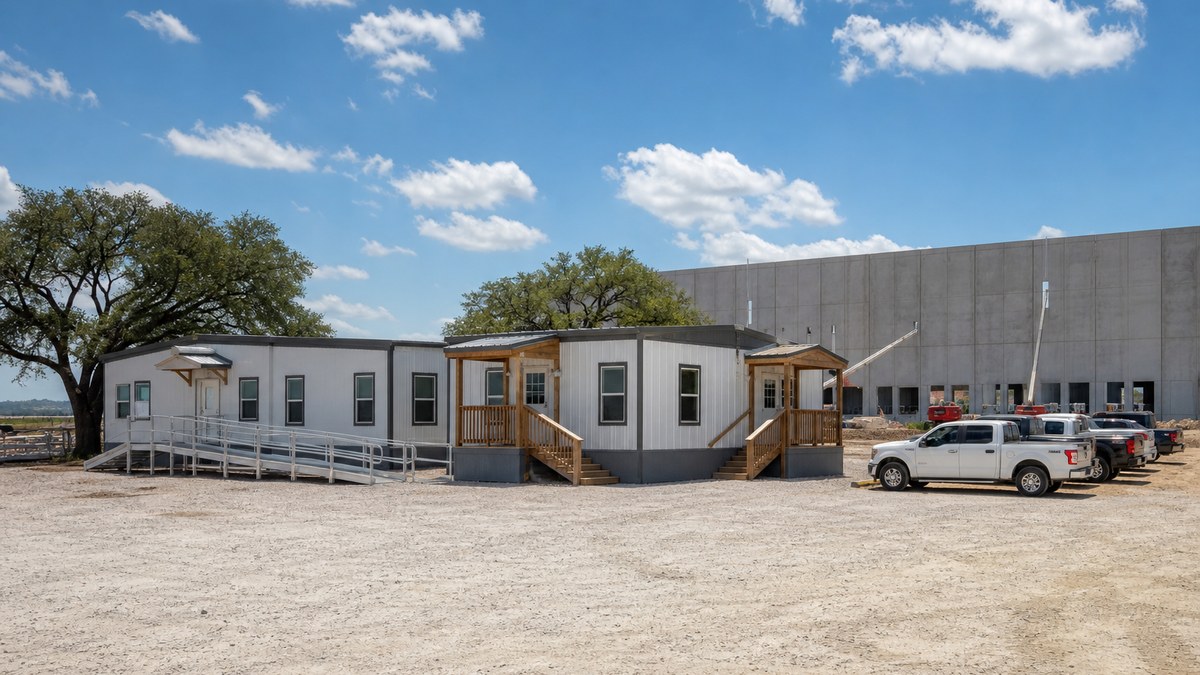
Modular buildings in Fort Worth, TX are factory-built offices, classrooms, clinics, restrooms, kitchens, housing and storage buildings that are trucked to a site in Fort Worth or Tarrant County, set on a foundation and connected to utilities. They can be rented for a few months, leased for several years or bought as permanent space. The short version: pick the building type and the term first, confirm zoning and the permit path with the City of Fort Worth (or the county if the site is outside city limits), plan the foundation for North Texas clay, and ask every supplier to price the full scope, not just the building. Through our network of manufacturers, dealers and installers, Dallas Modular Structures helps Fort Worth contractors, schools, employers and public agencies compare options.
Quick answer: The most common modular buildings in Fort Worth are mobile office trailers for construction and industrial sites, portable classrooms for schools, commercial modular buildings for permanent offices and retail, modular clinics, restroom buildings and storage containers. Texas regulates commercial factory-built buildings through TDLR's Industrialized Housing and Buildings (IHB) program, while the City of Fort Worth handles zoning, platting, site permits, inspections and the Certificate of Occupancy. Plan 3 things early: the permit path, the foundation and utilities, and a written quote that includes delivery, set, ramps and removal.
This guide is general information, not legal, engineering or permitting advice. Confirm requirements with the City of Fort Worth, TDLR and your design professional. To price a project, request a free quote or call (702) 738-2218. For the Dallas side of the metro, see our companion modular buildings in Dallas guide.
Why demand for modular space is high in Fort Worth
Fort Worth is one of the fastest-growing large cities in the country. The city's population page puts Fort Worth at 1,028,117 residents as of July 1, 2025, based on U.S. Census Bureau Vintage 2025 estimates, and NBC 5 DFW reported in May 2026 that the Census figures made Fort Worth the 10th-largest city in the United States, passing Jacksonville, Florida. The city spans parts of Tarrant, Denton, Johnson, Parker and Wise counties, so a single "Fort Worth" address can sit in very different settings, from downtown blocks to ranch land on the west and north edges.
Three trends keep temporary and permanent modular space in demand:
- Industrial and logistics construction in north Fort Worth. Hillwood reported in February 2026 that AllianceTexas, a 27,000-acre development in north Fort Worth, is home to 602 companies that directly support 73,134 jobs, citing Insight Research Corporation. In June 2026 Hillwood announced Alliance Westport 16, a 1,214,969-square-foot speculative industrial building with completion expected in July 2027, and said its AllianceTexas industrial pipeline totals 8.2 million square feet. Every one of those projects needs field offices, restrooms, storage and security buildings during construction, and many tenants later add in-plant offices and guard booths.
- Public works. On May 2, 2026, Fort Worth voters approved all six propositions of an $845 million city bond program: about $511.5 million for streets and mobility, $185.1 million for parks and recreation, $63.9 million for police, fire and emergency communications facilities, $59.9 million for animal care and shelter, $14.6 million for libraries and $10 million for affordable housing (City of Fort Worth; NBC 5 DFW). Road and park projects run for years and rely on site offices, and facility projects often need temporary space while buildings are replaced.
- Schools and housing growth. New neighborhoods on the north, west and south sides of the city bring enrollment growth to Fort Worth ISD and neighboring districts such as Northwest, Keller, Eagle Mountain-Saginaw, Crowley and Everman. Portable classrooms bridge capacity gaps while permanent schools are planned and built.
Fort Worth is a big area, not one market. A job near the Alliance corridor, a school campus in south Fort Worth and a clinic in the Near Southside each face different zoning, access and utility questions. Always start with the exact site address and confirm whether it is inside Fort Worth city limits, in its extraterritorial jurisdiction (ETJ) or in a neighboring city.
Modular building types used in Fort Worth
Most Fort Worth requests fall into a handful of building families. The table summarizes what each is used for and the main planning question.
| Building type | Typical Fort Worth uses | Usual term | Main planning question |
|---|---|---|---|
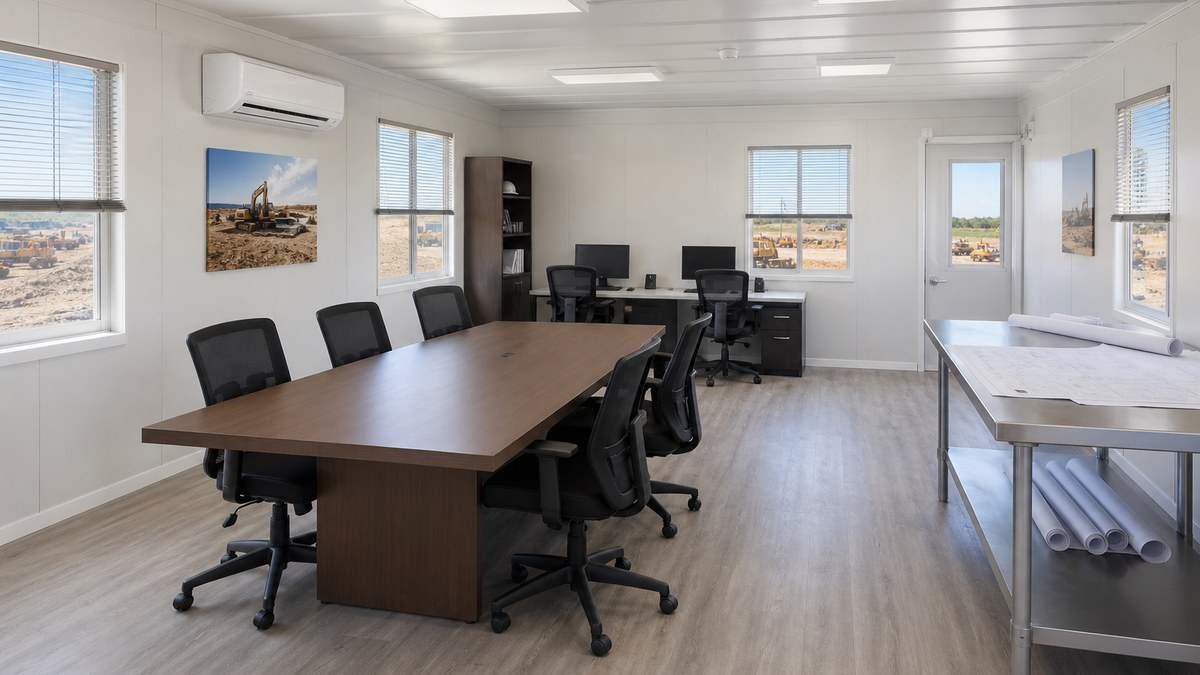
| Mobile office trailers | Construction field offices on industrial, road and building projects; yard and plant offices | Months to a few years | Size, number of offices, ramps and steps, power and data |
| Portable classrooms and classroom complexes | Enrollment growth, swing space during school bond construction, charter and private schools | One to several school years | TEA safety items, accessibility, restrooms and covered walkways |
| Commercial modular buildings and permanent modular | Offices, retail, branch facilities, multi-section buildings on permanent foundations | Permanent or long lease | Zoning, design standards, platting and foundation design |
| Modular medical buildings | Clinics, testing sites, outpatient expansions near hospital campuses | Temporary or permanent | Health-care occupancy rules, plumbing, HVAC and accessibility |
| Restroom buildings and modular kitchens | Job sites, parks, events, school campuses, kitchen remodels | Weeks to permanent | Water, sewer or holding tanks, service schedule |
| Workforce housing | Crew housing for large plants, energy and infrastructure projects in the wider region | Months to years | Zoning, life safety, utilities and services |
| Storage and office containers | Tool and material storage, records, ground-level site offices | Weeks to years | Ground access, security and placement on the site plan |
| Sales offices | New-home communities and leasing offices | Life of the sales program | Public access, parking and accessibility |
See every option on our building types page and the sectors we serve on the industries page, including construction, industrial, manufacturing, government, education and medical.
How Texas and Fort Worth regulate modular buildings
Modular projects in Fort Worth sit under two layers of rules: the state program that covers the factory-built modules, and the city process that covers the land, the site work and occupancy.
The state layer: TDLR's Industrialized Housing and Buildings program
Texas regulates factory-built commercial buildings through the Texas Department of Licensing and Regulation's Industrialized Housing and Buildings (IHB) program under Texas Occupations Code Chapter 1202. Buildings built under the program are designed to the state's mandatory codes, reviewed by approved design review agencies, inspected in the plant and labeled with a Texas decal on each module. For buildings in the program, TDLR's code editions effective July 1, 2024 are the 2021 International Building, Mechanical and Plumbing Codes, the 2020 National Electrical Code and the 2015 International Energy Conservation Code.
A few points matter in practice:
- Construction-site offices can be treated differently. TDLR's guidance excludes buildings used by the builder at a construction site and not open to the public. A field office for a general contractor is often in that category, while a sales office or public office is not. TDLR also notes that relocatable buildings labeled under the program must comply with all of its requirements, and many smaller units are labeled anyway because cities accept them more easily.
- The city cannot rewrite the building code for a decaled building, but it does enforce zoning, setbacks, site permits, utilities and inspections. TDLR's municipal guidance also says a city may require an approved decal on every module.
- Foundations are designed for the site. Commercial IHB buildings may use a temporary foundation with tie-downs and ground anchors where the city allows it; permanent foundations are designed by a Texas-licensed engineer or architect.
- Used buildings need their paperwork. Moving a used building to a new site works best when the original Texas decal and data plate can be verified. Altered buildings may need TDLR recertification. Our used vs. new modular buildings guide covers the details.
Accessibility follows the ADA and the Texas Accessibility Standards. Projects with an estimated construction cost of $50,000 or more generally must be registered with TDLR for accessibility review, which affects ramps, routes, restrooms and parking.
The city layer: zoning, platting, permits and the Certificate of Occupancy
The City of Fort Worth's Commercial Development Guide (revised September 30, 2025) states that before land is developed in the city it must be zoned and platted, and that any building used or occupied in Fort Worth must have a Certificate of Occupancy. For a permanent modular building, that usually means the same path as a site-built commercial building:
- Zoning verification. Confirm the zoning district allows the use, and check any overlay, design or historic district rules.
- Platting. The guide notes that a plat is generally recorded before a building permit is issued. Unplatted tracts on the growing edges of the city often need this step.
- Infrastructure and utilities. Water, sewer, stormwater, grading and any public improvements are reviewed by the relevant city teams.
- Building permit. Applications are submitted through the city's online permitting system. The guide lists a target of 7 business days for commercial building permit review, though complete plans and the project's complexity drive the real timeline.
- Inspections and Certificate of Occupancy. Foundation, utility connections and final inspections lead to the CO before anyone moves in.
Fort Worth's Development Services Customer Center is on the 5th floor of City Hall at 100 Fort Worth Trail, Fort Worth, TX 76102 (817-392-2222). Its Walk-In Permit Assistance Team offers same-day help for smaller projects, such as commercial remodels and moves into existing tenant space under 6,000 square feet with no change of use. New modular buildings normally go through full plan review rather than the walk-in desk, so plan for that.
Some city incentive programs carry their own design rules. For example, the Commercial Development Guide's Neighborhood Empowerment Zone (NEZ) design guidelines call for masonry content on new construction, and non-residential mobile structures are not eligible for NEZ incentives. If a project relies on an incentive, confirm the design requirements before choosing a building.
Outside city limits? Sites in unincorporated Tarrant, Parker, Wise, Denton or Johnson County follow a different path. Texas uses council-approved third-party inspectors for IHB installations outside city limits, and the county handles items such as driveway access and floodplain review. Our modular building permits guide walks through both paths.
Site planning on a Tarrant County site
The building is often the easy part. Most delays and change orders on Fort Worth modular projects come from the site. Plan these items before you sign a quote:
- Expansive clay soils. Much of the Fort Worth area sits on clay that swells when wet and shrinks when dry. Temporary units are typically leveled on blocking and anchored, while permanent buildings often use engineered piers or slabs. See our foundations on North Texas clay guide.
- Heat, wind and hail. The National Weather Service Fort Worth office lists July 1 as DFW's average first 100-degree day, and Texas leads the nation in major hail events. Ask about HVAC sizing, roof systems, window protection and tie-downs. Our Texas weather guide covers specifications.
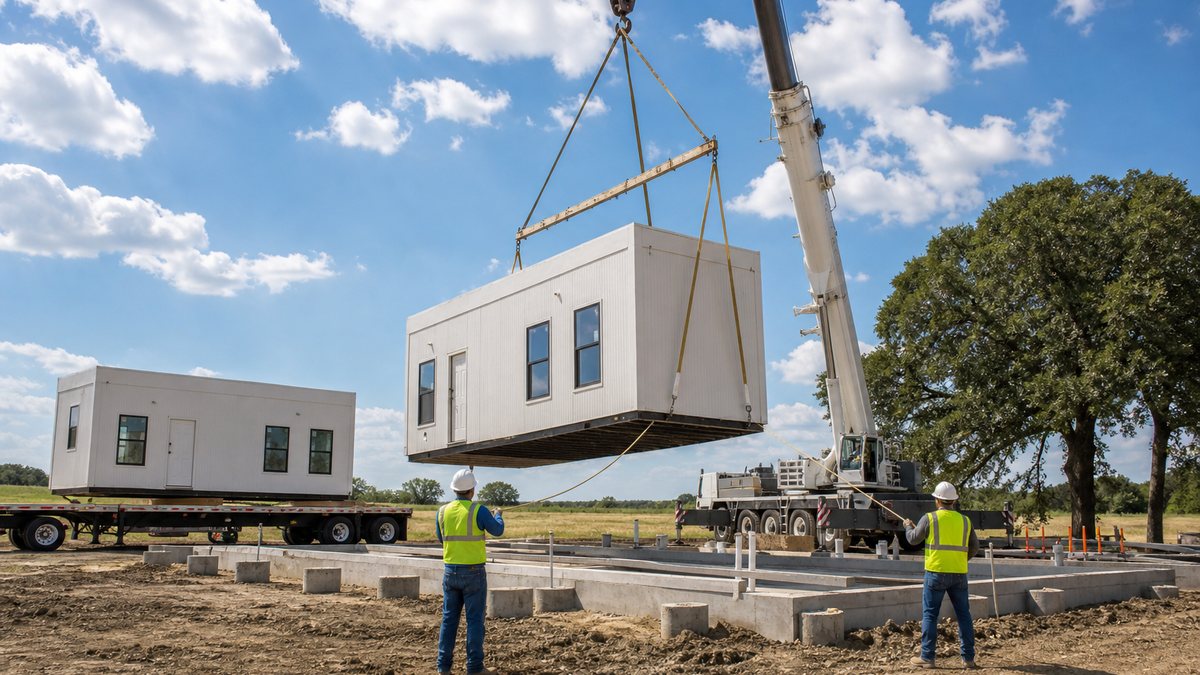
- Delivery access. Modules arrive on trucks and are set with a forklift, a toter or a crane. Check gate widths, turning room, overhead power lines and soft ground after rain. Downtown and Near Southside sites may need street-use coordination; open sites on the north and west sides are usually simpler.
- Utilities. Confirm power service (temporary pole or permanent service), water and sewer connections or holding tanks, fire alarm needs and internet. Utility lead times can be longer than building lead times.
- Drainage and floodplain. Fort Worth has many creeks and Trinity River tributaries. Keep buildings out of drainage paths and check floodplain maps before choosing a pad location.
- Accessibility and circulation. Ramps, landings, steps, accessible parking and routes between buildings need space on the plan. For public-facing buildings, these items are part of the TDLR accessibility review.
- Security. Job sites and yards often add fencing, lighting, cameras and a guard shack at the gate.
Rent, lease or buy in Fort Worth?
The right contract depends on how long you need the building and whether it will move.
| Option | Best for | Ask about |
|---|---|---|
| Rent | Short or uncertain terms, such as a construction field office or a one-year classroom need | Monthly terms, damage waiver, delivery and return charges, extension rates |
| Lease | Multi-year needs with a known end, such as a phased school or industrial program | Lease length, maintenance, relocation between sites, end-of-term condition |
| Buy | Permanent space or buildings you will reuse across many projects | Decals and records, foundation design, warranty, resale or relocation plans |
Our rental vs. lease vs. buy guide explains the trade-offs, and the services page covers sales, leasing, delivery and relocation. For job-site offices, the mobile office trailer rental guide has a sizing checklist that applies across DFW.
Cost factors for a Fort Worth modular project
We do not publish prices, because modular costs in Fort Worth vary widely with the building, the site and the term. These factors move a quote the most:
- Building size and configuration: single-wide, double-wide or multi-section, number of offices, restrooms and specialty rooms.
- New or used: availability, condition, and whether the decal and data plate can be verified.
- Term: months on rent or years on lease, plus the chance of extensions if the project runs long.
- Site work: grading, pads, drainage, foundation type on clay soils, and restoring the site afterward.
- Utilities: power, water, sewer or holding tanks, fire alarm and data.
- Ramps, decks and steps: accessible ramps and landings are often a larger line item than expected.
- Delivery and set: haul distance, escorts for wide loads, crane or forklift needs and the teardown at the end.
- Permits, engineering and inspections: city fees, engineered foundation drawings and third-party inspections where required.
- Furniture and packages: furniture, appliances, security systems and storage containers added to the order.
Ask every bidder to list these items separately. A low monthly rate with ramps, set-up and removal "by others" is not a low quote. On schedule, McKinsey's 2019 research found modular construction can shorten project schedules by 20 to 50 percent when factory work overlaps site work; that overlap only pays off if permits and site preparation start at the same time as the order.
Need numbers for a Fort Worth site? Send the address, building type, size, term and target date through our quote form or call (702) 738-2218. We will return options through our network of manufacturers, dealers and installers.
Fort Worth project scenarios
These general scenarios show how the planning steps above play out in different parts of the city and its neighbors. They are illustrations, not descriptions of specific projects.
Field offices for a north Fort Worth industrial build
A general contractor building a distribution center near the Alliance corridor needs a double-wide field office, a restroom unit, two storage containers and a gate booth for the life of the project. The site is open and flat, so delivery is simple, but the team still plans temporary power, a gravel pad above the drainage path and anchoring for spring storms. Similar setups serve projects in nearby Haslet, Northlake, Roanoke and Keller.
Portable classrooms for a growing school
A school on the fast-growing edge of the city needs four classrooms and a restroom building for the next school year while a permanent addition is designed. The district specifies TEA school-safety items, covered walkways and accessible ramps, and plans the set for the summer break. Neighboring districts in Saginaw, Crowley and Everman face the same questions. Our portable classrooms guide and school swing space guide go deeper.
A permanent modular clinic near the medical district
A health-care provider wants a permanent single-story modular clinic. Because the building is permanent and open to the public, it follows the full path: zoning verification, platting if needed, engineered foundation, TDLR accessibility registration, building permit, inspections and a Certificate of Occupancy. See our modular medical clinics guide.
Temporary space during a public facility project
When a public facility is replaced or renovated under a bond program, staff may need temporary offices, restrooms and storage on or near the site. Government modular buildings can be leased for the construction period and removed afterward, with procurement handled through the agency's purchasing rules.
West and south of the city
Projects toward Benbrook, White Settlement, Aledo and Weatherford, or south toward Burleson and Cleburne, often sit on larger, rural-feeling tracts. The key questions are whether the site is in a city or an unincorporated county area, how utilities reach the pad, and how far the units travel.
Fort Worth's mid-cities and eastern neighbors, including Arlington, North Richland Hills, Haltom City and Hurst, each have their own permit offices. Start with the city page for your site, then see the full list on our locations page and our main Fort Worth modular buildings page.
Fort Worth modular project checklist
- Site address confirmed: inside Fort Worth city limits, ETJ, or another city or county.
- Zoning verified for the use; overlay, design or incentive rules checked.
- Platting status confirmed for permanent buildings.
- Building type, size, room list and term decided (rent, lease or buy).
- Texas IHB decal and data plate confirmed for each module, or construction-site exclusion confirmed in writing.
- Foundation plan for clay soils, drainage and tie-downs; engineer engaged for permanent buildings.
- Utilities planned: power, water, sewer or tanks, fire alarm and data.
- Accessibility: ramps, routes, restrooms, parking; TDLR registration if the project meets the threshold.
- Delivery route and set method checked (gate, turning room, overhead lines, crane).
- Quote lists delivery, set, ramps, steps, skirting, utilities, permits, removal and return as separate lines.
Frequently asked questions
Do I need a permit for a modular building in Fort Worth?
Usually, yes. A permanent modular building follows the city's commercial development process: zoning verification, platting where needed, a building permit, inspections and a Certificate of Occupancy. A temporary construction-site office may follow a simpler path, but utility connections and site work still need city approval. Confirm with Fort Worth Development Services for your address.
Who regulates modular buildings in Texas?
The Texas Department of Licensing and Regulation regulates commercial factory-built buildings through the Industrialized Housing and Buildings program. Modules are built to the state's mandatory codes, inspected in the plant and labeled with a Texas decal. The City of Fort Worth enforces zoning, setbacks, site permits, utilities and inspections.
Where is the City of Fort Worth permit office?
The Development Services Customer Center is on the 5th floor of Fort Worth City Hall at 100 Fort Worth Trail, Fort Worth, TX 76102. The phone number listed by the city is 817-392-2222. The walk-in team handles smaller projects; new buildings normally go through full plan review.
How much does a modular building cost in Fort Worth?
It depends on the building size and type, new or used, the term, site work, foundation, utilities, ramps, delivery and set, permits and removal. We do not publish prices because these factors vary from site to site. Send your details and we will return comparable quotes from our network.
Can I put a mobile office on a construction site in Fort Worth?
Yes, construction field offices are common across Fort Worth. TDLR guidance treats offices used by the builder and not open to the public differently from public buildings, but the city still reviews temporary power, water and sewer connections, and the site plan should show the office, parking and access.
What foundation does a modular building need on Fort Worth clay?
Temporary buildings are commonly leveled on blocking or piers and anchored with tie-downs where the city allows a temporary foundation. Permanent buildings typically use engineered piers or a slab designed by a Texas-licensed engineer for the site's expansive clay soils and drainage.
Should I rent, lease or buy a modular building in Fort Worth?
Rent for short or uncertain needs such as a single construction project, lease for multi-year needs with a known end date, and buy when the space is permanent or the building will be reused across many sites. Compare all three with the full scope priced, including delivery, set and removal.
Are portable classrooms allowed at Fort Worth area schools?
Yes. Portable classrooms are used by many districts in and around Fort Worth. They are treated as school facilities under TEA rules, including the school-safety requirements for exterior doors and door numbering, and they need accessible routes, restrooms and city site approvals.
What if my site is outside Fort Worth city limits?
Outside city limits, Texas uses council-approved third-party inspectors for IHB building installations, and the county handles items such as driveway access and floodplain review. Neighboring cities such as Arlington, Burleson or Keller have their own permit offices and rules.
Does Dallas Modular Structures serve Fort Worth?
Yes. We help contractors, schools, employers, health-care providers and public agencies across Fort Worth, Tarrant County and the rest of Dallas-Fort Worth compare modular options through our network of manufacturers, dealers and installers.
Related
Also see our modular buildings, construction site restrooms, storage containers, data center construction, K-12 schools, colleges and universities and specialty buildings pages.
Sources
- City of Fort Worth, Population (U.S. Census Bureau Vintage 2025 estimate).
- NBC 5 Dallas-Fort Worth, Fort Worth ranked 10th largest city in U.S. with 1.03M population (May 16, 2026).
- City of Fort Worth, 2026 Bond Program, and NBC 5 DFW, Fort Worth voters pass $845 million bond package (May 2026).
- City of Fort Worth, Commercial Development Guide (Rev. 1, September 30, 2025).
- City of Fort Worth, Walk-In Permit Assistance Team.
- Hillwood, AllianceTexas economic impact release (February 24, 2026) and Alliance Westport 16 release (June 22, 2026).
- Texas Department of Licensing and Regulation, Industrialized Housing and Buildings: Frequently Asked Questions.
- Texas Department of Licensing and Regulation, Architectural Barriers: Texas Accessibility Standards.
- McKinsey & Company, Modular construction: From projects to products (2019).
This guide is general information, not legal, engineering or permitting advice. City procedures, codes and programs change; confirm requirements with the City of Fort Worth, TDLR, your county, your design professional and the supplier before you rent, lease, buy or install a modular building.